


Metaview Raises, LinkedIn Hunts, & HCA Gambles on Palantir

Broadcast live from Amsterdam the land of legal vices and zero e-scooters, Chad and Cheese link up with Scottish export Stephen McGrath and Belgian badass Lieven Van Nieuwenhuyze at the E-Recruitment Congress for another round of corporate roasts and industry real talk:
Metaview’s $60M Flex: Proof that if you slap "agentic AI" on a gloriously mediocre note-taking app, VCs will drown you in $110 million total funding so you can double your headcount and burn cash like it's 2021.
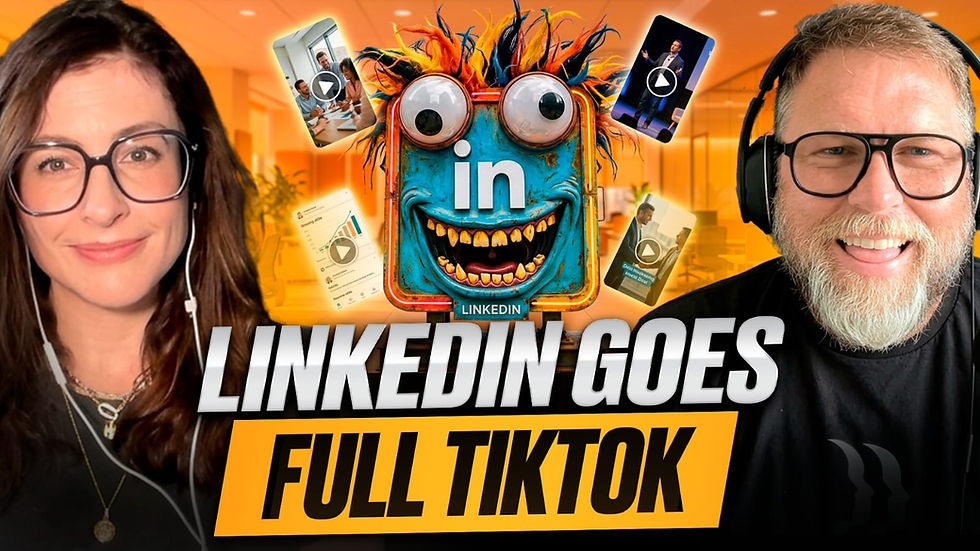
LinkedIn’s Data Delusions: Microsoft’s favorite walled garden is busy executing third-party tools for "data molestation"?
Palantir’s Healthcare Horror: Big Brother attempts automated nurse scheduling to "eliminate favoritism," resulting in systemic chaos.
The "Soft Patch" Job Market: As official employment numbers plummet, employers are shocked—shocked!
Top it off with zero-effort dad jokes, bad tan lines, and zero actual discussion about cheese, and you've got a classic episode of HR's most dangerous podcast.
PODCAST TRANSCRIPTION
Joel Cheesman: Oh, yeah, straight out of the Red Light District. This is the Chad and Cheese Podcast. I'm your co-host, Joel, no weirdos and no beardos, Cheesman.
Chad Sowash: It's Chad. The Mexican sun hits much different. Sowash.
Lieven Van Nieuwenhuyze: I'm leaving the Red Head Districts.
Chad Sowash: I like that.
Stephen McGrath: I'm Stephen. Would I get banned in here for wearing meta glasses? McGrath.
Joel Cheesman: Stephen McGrath is in the house! And on this week's episode of HR's Most Dangerous Podcast, LinkedIn bans, MetaView raises, and we're live from the E-Recruitment Congress in Amsterdam. Let's do this. What's up, guys? Now, when you say the sun hits differently, I'm guessing you're saying S-U-N and not S-O-N. You don't have a bunch of illegitimate children down in Mexico?
Chad Sowash: No comment. Yeah, no.
Joel Cheesman: 'Cause you did a tour in South America, so who knows?
Chad Sowash: I did. Thanks for reminding me. But going back to that in a different way, no, it was just... went to Cabo for my buddy's wedding, Chris and Marin. Yes. Congratulations, guys. Congratulations. Yeah, but it's funny, because I'll be in Portugal out on the beach, I don't have to worry about...
Joel Cheesman: Yeah.
Chad Sowash: ...getting burnt. You just don't. You go to fucking Mexico, you're that close to the equator, I mean, much closer, let's just say that. Yeah, I got burnt. I haven't gotten burnt in a long time.
Stephen McGrath: What would happen to these two redheads? I walked through the train station to here, and I'm this red.
Chad Sowash: It's crazy when I walk.
Stephen McGrath: There would have been combustion happening there, yeah. But, yeah, the sun hits a little, a little different. Then on to Dallas, stayed inside the entire time, SIA. Thanks for having me, guys. But yeah, good times.
Joel Cheesman: And now you're here, and then you go back... We'll cover this in travel, but you're far from done.
Chad Sowash: I am. We are, yeah. Well, we'll hit that in travel.
Joel Cheesman: How did we wait this long to get Stephen on the show? Which actually happened by accident. So to the listeners out there, we actually did a show, and they screwed up the recording, so we're doing the show again, but we were meeting with Stephen, and the podcast gods said, "Stephen needs to be on the show."
Stephen McGrath: "Dry run" is only my first time with you. I have been on the show with Lieven and Chad before in the Europe show.
Joel Cheesman: Oh, well, I don't listen to the show, so...
Stephen McGrath: Yeah, I was going to say it's good to see that you're doing quality control, Joel. We have people...
Joel Cheesman: I'm sorry, Mr. Fall Vacation. Yeah, we're going to see a lot less of Chad in the next few months, don't worry about that. Well, I'll be gentle, 'cause you're my first time.
Chad Sowash: I think he actually paid Stephen to give him some time so he could get on.
Joel Cheesman: Yeah. Who paid Stephen?
Chad Sowash: It was conspiracy theory.
Joel Cheesman: Well, he dressed up for the show.
Stephen McGrath: I did, yeah.
Joel Cheesman: If you're not watching on YouTube, you're missing out.
Stephen McGrath: I was going to wear a kilt, but the camera's right there, and, you know, we don't want any...
Chad Sowash: I just love you go real dark to show off the whiteness, or I don't...
Stephen McGrath: It's 'cause if I'm walking about in the nighttime, I need to find my way home. So you're glowing, basically.
Joel Cheesman: If you're listening, if you remember Mike Tyson in the '80s coming on to the... through the ring, that's kind of what Stephen's rocking.
Chad Sowash: Except Stephen's complexion is a little bit different.
Stephen McGrath: Just a touch. I did actually glow. What?
Joel Cheesman: I have heard him say he could take Tyson, if you uh... Scott's night, yeah. What's up, Lieven?
Lieven Van Nieuwenhuyze: Is something up?
Joel Cheesman: Are you overwhelmed? Where are we? Where are we?
Lieven Van Nieuwenhuyze: Think about...
Joel Cheesman: This is your time to shine, let's talk about the congress.
Lieven Van Nieuwenhuyze: The E-Recruitment Congress. We've been working on this for over two years, and now we're here.
Chad Sowash: I know.
Lieven Van Nieuwenhuyze: And you're here.
Chad Sowash: Yeah.
Joel Cheesman: Don't be so humble, you've been working on this for two years. You make all this happen.
Lieven Van Nieuwenhuyze: All by myself.
Joel Cheesman: Yep.
Chad Sowash: I have to say that I think most events are missing kind of like a trick, because I really miss this event, probably because it takes two years. So the scarcity, I'm like, "Ooh, when can we get back there?"
Joel Cheesman: So what can we expect? You guys always throw some curveballs, you guys always get innovative. I think one year you were on... we had digital Lieven on the screen talking to your boss, remember that? So can we expect anything new and interesting?
Lieven Van Nieuwenhuyze: My avatar. That's right, two years ago we had an avant-premiere of my avatar which was linked to ChatGPT, and I was like answering everything. I already forgot about it. That's cool. I knew the answer to everything. This year we're going to be talking about, of course, AI, but also about physical AI, so the first robots have just arrived.
Chad Sowash: You saw them?
Lieven Van Nieuwenhuyze: Yeah, we're going to have...
Chad Sowash: Still in the box.
Lieven Van Nieuwenhuyze: ...a humanoid, his name is Jo. So we'll be having some humanoid robots.
Joel Cheesman: He's the smartest of the robots, and the sexiest.
Lieven Van Nieuwenhuyze: And these robots will actually be working at the congress doing whatever they can, I think, handing out gift bags or carrying boxes to wherever the boxes need to be carried.
Joel Cheesman: They won't be podcasting, will they?
Lieven Van Nieuwenhuyze: They won't be podcasting, no.
Joel Cheesman: They won't be DJing, will they? 'Cause Kebu's not here this year.
Chad Sowash: No, no, no, don't bring that up, that's just...
Lieven Van Nieuwenhuyze: Kebu was cool. I'm still a big fan of Kebu.
Joel Cheesman: His car's still broken down on whatever highway...
Chad Sowash: His van!
Joel Cheesman: ...for Helsinki.
Chad Sowash: Down by the river, yeah.
Joel Cheesman: State Road, State Road 22.
Lieven Van Nieuwenhuyze: People have no clue what you're talking about, but it was fun.
Joel Cheesman: That's okay, we got American audience, they understand state roads. So this guy's speaking, right? What do you... what's your... what's your discussion?
Stephen McGrath: I'm going to be talking about how AI agents might be ready, but your recruitment process probably isn't. So...
Joel Cheesman: Oh, very good point.
Stephen McGrath: ...think "shit in, shit out" basically is what the gist of it is.
Joel Cheesman: We call that "dirty D", dirty data, here on the show.
Chad Sowash: Or Cheesman's weekend after... Taco Bell.
Joel Cheesman: Or my night in the Red Light District, yeah, let's do...
Stephen McGrath: Yeah, so just talking about how people actually need to be ready for that, and it's all good and well these things getting distracted by all the shiny lights, and they are, but actually, you know, used to be the same if you switched ATS back in the 2000s, you'd be like, "Oh, I've got to bring a million people over," but actually 900,000 of them were dead or retired, and you should probably clean that data. So people doing that with anything that's part of the process causes a bit of trouble down the line, so we'll talk about that.
Joel Cheesman: So do you come to Amsterdam much? Do you have a funny Amsterdam story, or was there a war back in the 12th century?
Stephen McGrath: I've never been to Amsterdam.
Chad Sowash: You've never been to Amsterdam? This is your first time?
Stephen McGrath: This is my first time, yeah.
Lieven Van Nieuwenhuyze: You weren't here last time? I know you were in Austin.
Stephen McGrath: You didn't invite me last time, Lieven, but thanks very much for bringing that up. I'm so hurt about that.
Chad Sowash: We'll take him to the district tomorrow.
Lieven Van Nieuwenhuyze: But you've been speaking at a conference four years ago then.
Stephen McGrath: Yeah, four years ago there was... In Austin, right, right, right. Yeah, that was the...
Joel Cheesman: Now, have you been to Glasgow?
Lieven Van Nieuwenhuyze: I've been to Edinburgh, which is almost the same.
Stephen McGrath: I have never met two cities, two cities an hour away from each other sound fucking different.
Joel Cheesman: This is a weird thing about Europe. Everyone thinks Europe, I think in America, like you guys are just going to every country every weekend, and it's not true.
Stephen McGrath: No, of course not.
Joel Cheesman: You're an hour flight away from one of the iconic cities in Europe.
Stephen McGrath: No, but I mean, I lived in Bolivia and stuff, so I think the difference is that I've done those things rather than come... I've hit a lot of the kind of highlights of...
Joel Cheesman: That's like me saying I've never been to St. Louis.
Stephen McGrath: Yeah, well, that's weird.
Joel Cheesman: It's kind of weird.
Stephen McGrath: Most Americans haven't been to St. Louis, right?
Joel Cheesman: If it were an hour or two hour drive, most have. Anyway, let me... Let's do shout-outs.
Stephen McGrath: Shout-outs! There we go.
Joel Cheesman: That's what I like. He's on a contact high, everybody. As you know, Chad, our shout-outs sponsored by ProvenBase. Because of ProvenBase, we're able to send out Chicken Cock. And you know who loves Chicken Cock?
Stephen McGrath: And actually, that just was a genuine reaction. Oh, I love it. Yeah, man.
Joel Cheesman: I love it, too. I have to queue him up on that one. Chicken Cock. So Chad and I send out a bottle each to a lucky listener. You've got to go to chadcheese.com/free to win, and that's from our friends, ProvenBase. ProvenBase. Chad, give us a shout-out.
Chad Sowash: Oh, yeah. Shout-out to our friends at SIA, that's Staffing Industry Analysts. Yeah, nice and easy, nice and easy. Ursula, Brian, and the team did a great job at in Dallas, where I was able to be on one of the Shark Tanks, and round table there, so it was a good time. Great fans.
Joel Cheesman: Did you dress like Mr. Wonderful, or like did you do the Mark Cuban thing, 'cause you were in...
Chad Sowash: I dressed like...
Stephen McGrath: It took me three turns of you telling stories about that at lunch to realize that you weren't actually talking about Shark Tank. Yeah, I was just kind of like, it's weird that you were on that and you never even said to me, but no, I've got the context now, so that's good.
Chad Sowash: Yeah, I wonder if there's like a trademark infringement.
Joel Cheesman: There probably is. That's why we're Firing Squad and not Shark Tank. We didn't want to get those cease and desists. Shout-out to those guys.
Chad Sowash: So who won the contest? Who stood out?
Chad Sowash: Company named FirstWork, which I thought was... it was very interesting, was innovative. Another one that is incredibly innovative, way ahead of its time, but when tech is moving this fast, five years ahead of its time back is now like 18 months, so not too much ahead of its time. Michael Bagelmann, he's been in this industry for a very long time. But yeah, no, really, really diversified...
Joel Cheesman: Do you feel like we're related to the Bagelmanns? You got Cheesman, you got Bagelman. Yeah, there's some lineage there somewhere.
Chad Sowash: The Cream Cheesemans, yeah.
Stephen McGrath: Oh dear.
Joel Cheesman: Getting way out of here. I'm going to give a shout-out to Gabriela Garcia. We hear a lot about automated bots applying to every job, multiple applicants, too many to deal with.
Chad Sowash: Now you're talking about troll teams.
Joel Cheesman: So Gabriela is the Chief People Officer of a company called Warp, which no one's ever heard of. We'll evaluate them at some point, and she has enlisted her employees to post content on to LinkedIn driving people back to the jobs and the company, and some of the numbers are pretty impressive for a startup. They've had 30 new hires in the last quarter, and all of them referenced LinkedIn as the reason why they applied and found out about the company. Nobody does that! So, there are plenty of tools. Chad, we know JobPixel, but there are others out there that can help you leverage your employees and video, and great content on social media that people are consuming. So shout-out to Gabriela, I think that's pretty... pretty good stuff.
Stephen McGrath: That's cool. Solutions-driven, who we don't work for. Yeah, Nikki, they literally did a an incentive for employees, like £1,000 in cash or something, and it was like just post more. Yeah, I forgot to mention there's a drawing every month or something at the company. And that was a direct result in people seeing their name more, and they're, you know, they're the next six months or something were all record-breaking months for them just because their people were more present and more active online, more visible.
Joel Cheesman: So now we just need you to vibe code something on Lovable where people can manage the posts.
Stephen McGrath: I think I've already had enough outdoor maintenance, so there needs to be something else for me.
Chad Sowash: Yeah, but I think the user generated content, like we've been pushing forever for employees, not listening to the CEO, not listening to head of HR, I mean, nobody gives a shit what they have to say, but listening to actual people doing the work, that's good stuff. It means authentic, if it doesn't sound like it's, you know, read off a 3x5 card, yeah, so that's good stuff.
Joel Cheesman: The beauty is the algo now, it's all for you. I don't have to follow somebody to get their content, so if someone's talking about Python jobs in Toledo, and I live in Toledo, there's a good chance I might see that content.
Chad Sowash: There's a joke in there, Python jobs.
Joel Cheesman: Python in Toledo, yeah. That was a good Friday night. Did you have a shout-out, Lieven, or no?
Lieven Van Nieuwenhuyze: No.
Joel Cheesman: Just the congress.
Lieven Van Nieuwenhuyze: The congress, I think it's shout-out enough.
Joel Cheesman: e-recruitmentcongress. Is there a version without the hyphen in the URL? Like, do you own erecruitmentcongress.com?
Lieven Van Nieuwenhuyze: No.
Joel Cheesman: Okay. Do I need one?
Lieven Van Nieuwenhuyze: You should, yeah. It's easier for podcasters to promote. E-hyphen-recruitment.
Joel Cheesman: We want to be very exclusive. You have to know someone to get in. Do you have a shout-out? I know we're last second.
Stephen McGrath: No, I don't have any.
Joel Cheesman: You had an awards ceremony recently or something. You want to mention that or no? You didn't win, but you might win.
Chad Sowash: What? No, don't bring that up.
Joel Cheesman: Everybody's a winner. Shut up to all the losers, baby. Well done.
Stephen McGrath: I mean, being Scottish, you're kind of used to...
Chad Sowash: Yeah, yeah. Wait, whoa. Good job to stop filming, or I'll fight cheesewheel.
Joel Cheesman: There's a lot of windows around here, so it's a long... it's a long way down.
Chad Sowash: All right, travel's sponsored by Shaker Recruitment Marketing, that's right, go to shaker.com, check those guys out. We are going to Vegas next for Paradox / Workday frontline hiring event. That should be a blast. It looks like... I didn't think it was going to be that big. Usually they have the smaller events. Looks like there's going to be 200 plus people, and it's going to be mainly their customers. And if we know anything that Paradox has done well over the years, it's put together these lovefests, where they just like to share what they've... It is. It's like how much they... It's not just love Paradox, but all the other companies that are there, because it's like they feed off of each other with like best practices.
Joel Cheesman: To your point, it feels exclusive. It feels like a club event, and all the other customers.
Chad Sowash: I mean, it kind of... it's almost like a invite only.
Joel Cheesman: Yeah, and you leverage Workday in Vegas, hey, it's a recipe for success, for sure.
Chad Sowash: So we're going... we're going to that, unfortunately it's in Vegas, and we're in Amsterdam, and that's a long fucking flight, but we will be there. It's only because we love you.
Joel Cheesman: Chad does it for European...
Chad Sowash: Have you ever been to Vegas?
Stephen McGrath: Oh Jesus, he hasn't... I don't think I should be allowed in Vegas. That's probably...
Chad Sowash: You've been to Vegas.
Stephen McGrath: I've never been.
Lieven Van Nieuwenhuyze: Never been in Vegas either.
Chad Sowash: But I think Nashville is like the new Vegas.
Joel Cheesman: Nashville is more Vegas than Vegas now. Vegas is more expensive food, go to a show.
Stephen McGrath: Okay, I'm not interested now.
Joel Cheesman: You can find that.
Chad Sowash: Nashville is... Nashville is my jam.
Stephen McGrath: I'll stick to Dallas then.
Joel Cheesman: Almost kind of like my fantasy football team, Chad, which is kicking ass this week. Now, we're recording on a Monday for a Friday show, which means that OpenAI is going to acquire Indeed on Tuesday, so we'll miss that news, probably. But it means that we won't have our fantasy football update, but I do want to thank Fantasy Fix, or Factory Fix. Fantasy Fix, Factory Fix. Yeah, you should have that URL as promoting the... Anyway, Factory Fix...
Lieven Van Nieuwenhuyze: Without a hyphen?
Joel Cheesman: No hyphen, yeah, no hyphen, no hyphens. Factory Fix, thanks for helping out and supporting our unhealthy activity, fantasy football.
Lieven Van Nieuwenhuyze: Unhealthy activity.
Joel Cheesman: Stephen, what time is it?
Stephen McGrath: It's time for topics!
Chad Sowash: That's right, baby.
Joel Cheesman: That's not the soundbite for that.
Stephen McGrath: No. What do you mean?
Joel Cheesman: Is it time for shout-outs? That's why I got confused, because it's just topics. The topics are... But I like it. What's the soundbite for topics?
Stephen McGrath: Just "Topics". Yeah, it's just "Topics". Just "Topics".
Joel Cheesman: Topics!
Stephen McGrath: Topics!
Joel Cheesman: Let me get to topics then. Metaview, an AI-powered agentic recruiting platform, has raised 60 million big ones in a Series C round. This brings total raised to $110 million and comes on the heels of acquiring Rebel. Clients include the likes of Deel, Affirm, and Replit. Metaview was on Firing Squad in May of 2023, where Chad gave them the guns. Chad, three years hence, do you still give them the guns, or have you changed your opinion about Metaview? What's... what's the hot take on their new raise?
Chad Sowash: Well, they... Well, first and foremost, congratulations on the raise, and also congratulations on pivoting that shitty model they were in in the first place. They were a note-taker, and again, we had talked about how note-takers were going to be commoditized, that's why they got the guns. One thing I do like is, I like charismatic founders, CEOs, ones that are out there...
Joel Cheesman: The Ed Sheeran type.
Chad Sowash: Yeah, yeah, yeah. Well, him specifically, yes. But he's... he's very much very charismatic, he's out there. Didn't like the model. This... This is the model, there's no question, and for them to be able to turn that into literally agentic workflows, that's what's sexy and hot right now. We saw what happened with SmartRecruiters. They didn’t even have an MVP built. They flipped that, they had a... they had a great, they have and had a great team, and started talking about agentic, started pushing Winston, I mean, all of that before it was even built, they were acquired by SAP, right? If you have the right people in place, if you have... if you can prove that your agents are working, you've got this great workflow, yeah, it makes sense, and a pivot when you're a startup, a lot of times does make sense, and this... this time it did make sense. One thing I do want to say is, to see companies like this, 'cause we just talked to Ritu and Vank earlier today, they somewhat pivoted, right? They... They were really recruitment marketing, somewhat programmatic, and then at the end of the day, they did a huge pivot, and they went directly into owning top of funnel.
Joel Cheesman: Yeah.
Chad Sowash: And this is very agentic as well, so we're seeing companies like this either pivot or really add to what they're doing with agents, and to me, this... this is incredibly smart. So this is a big applause. Right now, I gave them the guns the first time, this is a big applause.
Joel Cheesman: Big applause, and... and it's not only a pivot, Chad, it's an AI pivot. So if you look at the likes of Handshake, Mercer, none of them started out doing what they do now, or at least what the money maker is now, they're all making money on AI in their case, training data. So what this problem solves is the influx of candidates, automated applies, that are killing companies right now. From their own PR, Metaview noted that applicants per recruiter has surged 412%.
Chad Sowash: Jesus.
Joel Cheesman: So it's... it's a big problem, and they're able to go to investors and say, "Look, AI is causing this issue, we have a solution," and certainly some of the proof's in the pudding with their... with their clients. My only concern would be the amount of money that they've taken. I'm not sure in today's environment you need to take $110 million, but they are going to bulk up. They talked about going from 80 employees to 250, physical offices in New York, London, San Francisco, so they're going to write some checks to build this thing up, go global, and I don't foresee the issue of automated applies going away anytime soon, and if they could be one of the players, or biggest players in that, I think it's a good move.
Stephen McGrath: I think raising that much money in today's world is just as much about marketing as it is anything else. It's just the ability for you to...
Joel Cheesman: Branding or marketing, or just... Okay.
Stephen McGrath: Yeah, so you... both, sorry. The actual raise itself is a marketing play, right? You being able to say, "This is a sea of people trying to do this thing, and we're one of the ones that people believed in" stamp. I think Metaview nailed it. "Hi, everybody, here's free accounts, everyone use this." They got a whole bunch of TA people talking about it before it was anything, before you could do... You could actually do the same thing on Teams that you could do with Metaview at that time, and then a quick pivot, raise a bit of money, quick pivot, raise a bit of money, and they keep going, and then now we've arrived at something several years down the line, and some of the other ones that you've mentioned have done that exact same thing. And you know, I think that kind of like either raise money, or sell to somebody, in SmartRecruiter's case, is all part of the marketing now, it's just as much about that than it is about financing anything, because people then believe in you, because somebody's believed in you enough to part with the check.
Joel Cheesman: So now they just need to up Eightfold's 800 by 800 booth at HR Tech or... Don't do it.
Chad Sowash: Yeah, don't do it. Yeah, I mean, that was so thirsty. I mean...
Joel Cheesman: But everyone knew who Eightfold was after that.
Chad Sowash: Yeah, that was, yeah. That was so thirsty.
Stephen McGrath: People were speaking really positively about it.
Joel Cheesman: They could get a lot more value out of sponsoring the Chad and Cheese Podcast, don't you think?
Stephen McGrath: Or the E-Recruitment Congress.
Joel Cheesman: There you go, there you go.
Chad Sowash: See, I do have one problem with this whole move, is it's an old PE move where you get money and you automatically have to slam head count. I mean, and I don't know how many founders...
Joel Cheesman: VCs love head count.
Chad Sowash: They're fucking idiots. They're idiots. PE VCs, they're fucking idiots when it comes to this, because we're in an age now, and that's an old playbook, back in the day you gave somebody money, well, the only way that you could grow is if you actually had head count, right? Now, we're scaling today without head count, and we are talking about Metaview, we're talking about a company that is a tech company, they should be scaling without head count, so in going, I mean, doubling head count is fucking stupid, that is burn that nobody needs, right? But yet, these I mean, it just it just blows my mind, so I'm glad Metaview with the money, but when you get the money, you're beholden...
Joel Cheesman: Yeah.
Chad Sowash: ...to PE and what they want you to do, so now they're going to have to slam that head count, but again, PE playbook is out the window, this is a new fucking age, man.
Stephen McGrath: And then reduced that head count in two years because you're not performing, sorry, you don't have engineering in the US anymore, it's all...
Chad Sowash: They're not going to know what to do with those people, even back in the day, so back in the day when Indeed and SimplyHired popped out, Indeed had maybe like, I don't know, 20 people, SimplyHired had like 100, and you'd go to SimplyHired, which was right across from Google in the Valley, right?
Joel Cheesman: Silicon Valley, yeah.
Chad Sowash: And you'd be looking around, you're like, "What's that guy do?" "I don't know." I mean, it was just it was for it was for nothing a lot of times, so anyway, old PE play playbook didn't work then in many cases, sure as hell won't work now.
Joel Cheesman: I think it was Stalin who said quantity is a quality all its own, right?
Chad Sowash: If you're if you're calling them bullet catchers, yes.
Joel Cheesman: I mean, it's easier to get that next round when you talk about head count increases, it's harder to say we got a booth...
Chad Sowash: In in the old world, yeah, in the new world, if you can actually say, "Look, we were able to do all of this with this head count, and this is our burn," I mean, we are being fiscally responsible versus being idiots.
Joel Cheesman: But again, Indeed's example, Indeed took 10 million, I think, total, SimplyHired took a lot more than that, so once you take that money, which goes back to my commentary, like, was it too much? Like, hey, you're in the you're in the wheel now, you're in the gerbil gerbil... You're in the wheel now, like you got to keep running, you got to keep running.
Chad Sowash: That's what his internet at home works on.
Joel Cheesman: Let's take a quick break. Guys, LinkedIn is on the warpath again in their news. Word is the company recently kicked off PIN, that's P-I-N in case you didn't know, Gem, and NeuroScale off the platform for molesting their data. Who could who could possibly be next? Who could be next? Looking at you, Juicebox. Speaking of LinkedIn, they've also... a recent study also came out where over 140,000 profiles revealed that 58% of users do not describe their current role on their LinkedIn profile, and a whopping 50% leave their "About" section completely blank. Chad, what's your take on all the LinkedIn news this week?
Chad Sowash: I'll hit the first one up. Second one up first, where the the the data in LinkedIn, in many cases, is insufficient. It's old, and you've got companies over the years, they've got into this behavior and spend money, spend money, spend money, and then they're actually driving candidates into their applicant tracking systems where they're actually getting more fucking data! But yet, and I get it, back in the day, 15 years ago, the search apparatus within the applicant tracking system sucked, a lot of them would literally just die out and you couldn't actually search the record in your database. That's not the case today, but we're still working under the old behaviors of, "Well, I don't go to my applicant tracking system first, I go to LinkedIn first." Well, kids, the LinkedIn data is shit in the first place, so if you're going to pay, and again, I this is more of a leadership conversation, because recruiters are just going to spend your money, and I told them I get that, right? They're just going to do that. Leaders need to get a fucking backbone and say, "Look, you've got to start utilizing your database first." Not only that, we need to put different types of frameworks in place to be able to engage those individuals that we already see are qualified, but they didn't get the job this time, to try to keep them warm and ready for the next time, right? And and if they are work ready, then we can go ahead and grab them and pull them in. This is candidate ID, right, from from from day one. So, you know, this has been the whole idea all the way through, I think this is hopefully just a wake-up call for them to say, for for companies to go, "Oh, oh shit, we've been spending money on outside and paying for the same candidates over and over and over to fill our database, and then not using the leads that we have."
Joel Cheesman: Or or at least create incentives LinkedIn should create incentives for users to create more data, put more stuff in their profile, because in a world of quiet hires... In a world where AI, I don't know, like hey, like auto write it for me, do my about for me, and I'll just say yes. Um, so so what you have is with quiet quiet quiet hiring, companies aren't even posting the jobs, they just go right to LinkedIn, so now you have this problem that just keeps snowballing where the only people I find on LinkedIn are people that really want a job, or really care about their profile, and I'm just we're all just searching and getting to the same people again and again and again, and the the needles in the haystack never get found, but they're there, so I think LinkedIn needs to get on get their shit together and start helping these people write robust profile with AI, there's no reason why they they shouldn't.
Chad Sowash: Yeah, but the problem that you have there is, what we're hearing from um we're hearing from employers today is no candidate stick out, because all the profiles look the exact same.
Stephen McGrath: Yeah. Dynamic, team member, that's excited.
Chad Sowash: So it's so it's all just going to be gibberish and bullshit, but it's all going to be the same gibberish and bullshit, so again...
Joel Cheesman: They're going to be the same perfect candidate.
Chad Sowash: I think it all comes back down to external is not the answer, you have to build your own, and start being smart about this, and again, being fiscally responsible. Now, on the vendors getting kicked off side of the house, a very smart person said on a TikTok for history... On a WhatsApp, no, no, not yet, on a WhatsApp chat, "Anyone building their business around that access needs a Plan B." Remember who said that?
Joel Cheesman: Sounds like a very smart person to me.
Chad Sowash: Uh, Stephen McGrath said that. So this is where it's time for a...
Stephen McGrath: Time for a history lesson!
Chad Sowash: That's right. So back in, oh shit, it was it was a long time ago. Anyway, when Twitter was trying to become prominent, becoming prominent, and nobody had...
Joel Cheesman: Twitter Jobs, yeah.
Chad Sowash: ...and nobody had their jobs on Twitter, anything like that, uh, a guy named by the the name of Gary Zukowski built a platform called TweetMyJobs. And I was working at DirectEmployers, in charge of all alliances and that kind of stuff, and I was having a conversation with Gary, and I said, "Dude, what happens if Twitter shuts you down? What happens if Twitter shuts you down?" He's like, "I'm fucked." Luckily, he went on to get acquired by CareerArc, but point of the moral of the story is, don't make your whole fucking business model attached to somebody else like that. I mean, you you a plan B, I mean, shit, they they should be more than just focused on LinkedIn, but a lot of these platforms aren't.
Joel Cheesman: I mean, it's worse than renting a house, 'cause you at least get a year's lease on a house.
Stephen McGrath: I mean, I think for for me, what's kind of a bit bizarre about it all is, it's all the same thing with the same data set, with like a different wrapper on it, right? And actually, if anybody's using, so Lieven goes in to use one of these tools, and has and has a look, and he uses one and goes, "Okay, well, I like that workflow," but six candidates, and then uses the other one, it's like, "Okay, well, oh, that that lets me click and drag people, that's quite nice." Shit, there's the same six people, right? Okay, and and like that is my experience. I have used some of these tools for business development, I've had a look at all of them just for the nature of my job, and the reality is that like, you know, it's all different highways to get there, but we've all arrived at the same party at the exact same time, basically, right?
Joel Cheesman: There's a data house that, I forget the name of it, I know I've heard it before, but they all supply the same profiles. When we talked to ZoomInfo at RecFest, I mean, part of their pitch is ours is different. We'll go in and find for fine out for yourself, but I mean, it's hard to imagine that your results are going to be that much different than mine.
Stephen McGrath: And I think, you know, when you we had that when I was in an agency recruiter with, you know, with Adecco and others was we're all in the CV library, we're all in Indeed, we're all looking for this type of job against hundreds of other people, and even then, the only people with the really good CVs are the people that are looking for the jobs. You know, it's not David Smith who last updated it 15 years ago, are you going to start there or are you going to start at the 100% match? And I think that becomes the difficult thing, it's like we're doing that all over again, yeah, just like, but it says AI at the front, and it's a little bit shinier, so it's the exact same thing, it's just in a in a different type, yeah, whereas, you know, going in and actually this crazy, mental thing of building relationships with people and nurturing those relationships...
Joel Cheesman: Recruiters, recruiters should be very happy about this, 'cause that's that's their, yeah.
Stephen McGrath: That's what you made to do, it's it's the one thing I wanted to do when I became a recruiter, I did not want to write job descriptions, and do interview questions, and do I wanted to speak to people, get people jobs...
Joel Cheesman: Yeah.
Stephen McGrath: ...and as many times as possible.
Joel Cheesman: Yeah, and Chad, I'll see your Twitter Twitter Jobs commentary, and I'll I'll raise you a Facebook commentary. Remember BranchOut?
Chad Sowash: Oh god, yeah.
Joel Cheesman: So BranchOut, built on the Facebook platform, spammed all your friends to show them jobs, which had a very short lifespan. You could look at it and go, "This is not going to work," and Facebook pulled the rug out of them, and the tens of millions that they raised all down the all down the tubes. So it's it's always funny that people keep repeating this. I mean, we talked about HiQ for a year plus, who sued LinkedIn for the ability to get this content. LinkedIn drowned them in legal legal ease, and paperwork, and lawyers, and here we are, and now we're just repeating that with...
Chad Sowash: And it came down to terms of service, it wasn't that it wasn't right that, let's say, for instance, the candidate doesn't own their own data, right? That actually just came down to terms of service, and the stack...
Joel Cheesman: I don't know if that matters. Like, if they got bigger, they got a bigger bank account than you do, like if you can't like go head to head with LinkedIn for money perspective, like, doesn't matter.
Chad Sowash: Yeah, but I mean, they they did have, HiQ did have the rulings up until that last into that last piece.
Joel Cheesman: And there would have been another appeal, and it would just...
Chad Sowash: Yeah, you only get so many appeals.
Joel Cheesman: So, Lieven, when it comes to when it comes to like building your own database, I mean, 'cause you've seen this on a much larger scale from a staffing standpoint, obviously, you guys use the LinkedIn's, the Indeed's, and so on and so forth. Do you have a bunch of like siloed databases that you guys dig and use, or how does that actually work from a staffing standpoint?
Lieven Van Nieuwenhuyze: Problem is, House of HR consists of 52 different companies.
Chad Sowash: Are they all siloed?
Lieven Van Nieuwenhuyze: Some of them still are. We would like to have one big community, but just doesn't work out like that. So, um, most of them still use their own ATS, for example. The biggest one all use Bullhorn, but there are still others. From a technical point of view, it isn't that easy to share everything with everyone. So, yes, it's siloed, and I think some of the companies want to keep it that way, because if you share a very good resume with all the others, someone else might take it, and then you are missing out on placing the candidate. But that probably did not answer your question. What was your question again?
Chad Sowash: It's just are you utilizing the the data in your databases, like your applicant tracking systems, or are you guys mainly going out...
Lieven Van Nieuwenhuyze: No, no, we do both, so we are posting jobs, gathering the incoming resumes, but we also match our own databases, and we should do it more, and it's sometimes it's just easier on the short-term to just spread some vacancies all over the internet and sit back and enjoy and wait for someone to apply, but it's much more efficient if you use your existing database and keep people keep those profiles alive and get in touch, and are you still happy, what are you doing right now? But that's that's time consuming, so we ought to we should automate that.
Stephen McGrath: I'll use an example when I was at GE, um, where I helped a team in...
Joel Cheesman: Nice flex.
Stephen McGrath: ...Southern Europe, yeah, um, and, you know, was doing recruiting for Southern Europe, and quite one of those things was like it didn't really matter what technology we were using, because we were that company, applicants always came in. They were never that great, you know, most of them, 80% of them you could, you know, put them in the trash can, uh, for all the Americans, the bin, yeah, and it was just yeah, yeah, see you later, swipe right, swipe left. You know, but it was just always more exciting for recruiters to go for net-new, and when I got seconded there from Adecco, and part of our thing was you're always taught as an age- agency recruiter, database first, keep your contacts, refresh them, specialist area, keep going, and we brought that into that environment, not that not, you know, we weren't the only people doing it, but certainly we came in and were like, "This is how we do recruitment," you know, and everybody was a bit like, "No, no, we don't go into the Workday, we just leave that." "Have you ever used it?" And I'm like, "Yeah, don't get, it's horrible to use, but there's there's people in there." Um, you know, so I think that kind of thing of like it's easy just to sit back and let the applicants flow in. It is, but it's not...
Lieven Van Nieuwenhuyze: It's not the best way, no.
Stephen McGrath: ...it's not the best way.
Lieven Van Nieuwenhuyze: That's why you have to be very kind to your recruiters, because they only start actually being worth it after 5 years, when they know a lot of people, and when if one of the clients asks for, let's say, a commercial director in that specific industry, they immediately think of 5 names who might be available...
Stephen McGrath: Yeah.
Lieven Van Nieuwenhuyze: ...because they let them know that they're looking for something new, and that's when a recruiter becomes really valuable. So that's why you have to keep them, and not just after 3 years let them go, and and replace them by someone who might be cheaper, or whatever.
Stephen McGrath: Absolutely.
Joel Cheesman: So are you saying that humans default to what's easiest?
Stephen McGrath: Ah, yeah.
Lieven Van Nieuwenhuyze: No!
Stephen McGrath: No, I wouldn't. Who would have guessed?
Joel Cheesman: The keeping the fresh part is the hard part.
Stephen McGrath: I can see the train station from here, and I debated getting an Uber from there to here. I was like, "Ah, I'll just walk, it's 20 minutes, fine."
Chad Sowash: There is not a scooter in this fucking town.
Lieven Van Nieuwenhuyze: This is not 20 minutes. I mean, if this is 20 minutes, you walk too slow.
Stephen McGrath: It's 'cause you have to go round...
Lieven Van Nieuwenhuyze: I take my car and I just park right in front of the door.
Stephen McGrath: You take the BMW and... With somebody of Lieven's body fat percentage, it might be 10 minutes, but somebody for me, it's a little bit...
Chad Sowash: How does a 6.8 size...
Stephen McGrath: Shut up.
Chad Sowash: No e-bikes and no scooters.
Stephen McGrath: I was affronted to see there was no scooters.
Joel Cheesman: Get a bike! You're in Amsterdam.
Stephen McGrath: Can you just grab a bike? There's a bike rental place inside the hotel.
Joel Cheesman: You just grab a bike, okay. I didn't know.
Stephen McGrath: Didn't know.
Joel Cheesman: Well, we've talked about Palantir on the show quite a bit, Chad, but this is their first time ever being in a news story, so I'm kind of excited about the commentary that will come after. The largest hospital chain in the US is facing widespread backlash from nurses over an AI-powered automated scheduling software co-developed by Palantir. While management claims the tool cuts scheduling costs, eliminates favoritism, and maintains an optimal balance of skills, frontline staff reports severe systemic issues that they say threaten patient safety and drive nurse burnout. Chad, we talk a lot about Palantir, here's our chance to rip them officially. Your thoughts on them getting into the scheduling software game.
Chad Sowash: Yeah, this is uh, you talk about take 20 minutes to talk about Alex Karp and maybe a a ketamine trip, or something like that.
Joel Cheesman: "Am I the village idiot?" You saw that interview?
Chad Sowash: Yes!
Joel Cheesman: Yeah, that was great.
Chad Sowash: Yes, you are. So, for me, I mean, this is we hear a bunch of we hear a bunch about the bigger models, right? Palantir, obviously, which is really weird, 'cause they're in the surveillance side of the house, um, but we hear about bigger models all the time. We hear about Google, we hear about uh Facebook's model, we hear about OpenAI, we hear about Anthropic, Perplexity, all the all those, right? And for me, this just demonstrates that these people don't understand our space. They don't understand what's going on, whether it's talent acquisition, whether it's talent management, whether it's just scheduling. So, again, you've got a huge organization, HCA, who is going to put a shit ton of cash into Palantir, their CIO probably made that decision, I doubt HR did, um, because they're probably doing other, you know, other um projects for them, uh, and it's going to cost, much like an IBM or maybe a Deloitte engagement, it's probably going to run, I don't know, 10x what it was supposed to run, that's going to go a hell of a lot longer in building, and then you're going to get this kind of uh th- this ty- this type of deliverable/outcome. We need to focus on the people who actually know what the fuck they're doing in our industry, and allow them to build for us. Uh, I think that, for me, is is the big lesson here. Um, Google's not going to save us. It didn't with Google Base, it didn't with Google for Jobs, it didn't, you know, with Google Jobs. Facebook didn't with the Facebook social network bullshit. Twitter didn't. I mean, none of these companies did.
Joel Cheesman: MySpace got really close.
Chad Sowash: And they're not going to, right? So as we think these big companies are going to come be our saviors...
Joel Cheesman: Yeah.
Chad Sowash: ...they're just not going to.
Joel Cheesman: It's it's a it's a slippery slope, because you look at like Microsoft or Salesforce, so we were we've got our claws into this organization, they bought into us, they went through the due diligence, now how do we keep squeezing that money tree to get more of their budget? And and Palantir has been creatively able to come into organizations as a surveillance software and all that stuff, so now if I've got if I'm in if I'm in, how do I now expand that into more of the organization's businesses? So to go into scheduling and employee stuff is a natural progression, but You mean that's that's not surveillance? Do you want a surveillance company doing any of that?
Stephen McGrath: Yeah, but that's what like that's what I mean, like it's, you know.
Joel Cheesman: Well, do you want... I mean, do you want...
Stephen McGrath: It's an extension of, isn't it, of some...
Joel Cheesman: I mean, Microsoft, here's Teams, or here, you know, like here, do you want this? Here, check it off, you've already got the relationship, you've already signed off, your CTO already loves us, so now like let's just get things that they can check off. And to your point, it's like we don't really know this business, we don't really know this side of things, but we're an easy easy button for you to add this, so there's going to be more of these trip-ups, uh, like this with Palantir, and I think interestingly from the story, there are more instances, more and more every day, about how AI gets it wrong. It makes a mistake, we have this impression like this is a magic wand, and it's going to make everything great. Well, it's not, and we're learning that, and these are some of the growing pains that we're going to see. It's just unfortunate that we're dealing with healthcare and people living and dying and surviving uh illnesses.
Chad Sowash: Yeah, well, and then they I received a comment on LinkedIn about this being manufactured and being just the unions coming up with this shit, and it's like, is that your best defense?
Joel Cheesman: Yeah.
Chad Sowash: I mean, really, fucking are you kidding me?
Stephen McGrath: There's two things, two things I want to say about this. Can you see the three things it claims to solve for again? What did it say?
Joel Cheesman: Yeah, scheduling cost, favoritism, eliminates favoritism, and maintains an optimal balance of skills.
Stephen McGrath: So you could stop at scheduling costs and know these having a fit.
Chad Sowash: Yeah.
Stephen McGrath: Right?
Chad Sowash: Yeah.
Stephen McGrath: Oh well, you didn't solve, well, we came over budget, you didn't quite nail it, right? It's the things that follow that, so making the the claims that we are...
Joel Cheesman: Favoritism is very subjective.
Stephen McGrath: ...favoritism, fairness, into anything that involve real people data, with real life stories, and AI is very difficult to get right now, if if not almost impossible, right? So that's just a that's really, really hard. So if we just stopped at, you know, scheduling, we're probably not talking about this, we're probably we're not talking about it for as long as we talk about it, right? We talk about it and go...
Joel Cheesman: And let's be honest, most of the successful stories in our industry are we got scheduling right.
Stephen McGrath: Yeah, right, so like it's it's that kind of, and then I think the...
Chad Sowash: Paradox!
Stephen McGrath: Yeah, exactly, nailed it.
Chad Sowash: They do more than that!
Stephen McGrath: I know, but that's what they nailed!
Chad Sowash: That was the hook that got everybody loving...
Stephen McGrath: Well, you know why? Because everybody hates scheduling. I talked to um uh Cobe this morning from, he's the head of TA from Heineken, 30% of his team's time, 30% on scheduling!
Lieven Van Nieuwenhuyze: Can you imagine?
Chad Sowash: Yes!
Stephen McGrath: Yeah.
Chad Sowash: If you can, and Paradox nailed that.
Stephen McGrath: Yeah, absolutely. And I think the next part of that is like in this we've always had this build versus buy mentality, right?
Chad Sowash: Yeah.
Stephen McGrath: You know, House of HR will see that every day with people saying like, "Oh, we've got this for this, and it's going to solve the..." But "Oh, well, could we build it ourselves?" is going to is that's number one question right now on on everybody's lips, with all the tools that are available.
Lieven Van Nieuwenhuyze: Yeah.
Stephen McGrath: No! Just because you can, doesn't mean you should.
Chad Sowash: Where are you, 'cause I know you you vibe code, and you like to tinker quite a bit, where are you on the the SaaS-pocalypse, people building the stuff themselves, like, are you on are you on that, or are you on the "No, they're not going to build the stuff"?
Stephen McGrath: Uh, experience tells me that no, they're not going to. They're going to give it a bash, they're absolutely going to try it, um, but we're going to come round full circle, and they're not going to be successful at it. Um, so my kind of philosophy of that is build a concept for something, and then give it to someone that knows what they're doing with their data set to run with it, and move forward, because the expertise that they bring is their own company. They don't necessarily bring the the build, right? The 0 to 70, let's say, they don't build that bit. Um, and we've seen that, you know, um, at at Poetry where I where I work, we have very large companies that have said, "Hey, we're going to circle back with you, because we're going to go and build this," and then 3 years later, we're like, "So how's that build going, big fella?" And it's not going anywhere. Um, you know, and that's just the reality, because time and resources, and you're too busy trying to fix that fucking scheduling tool that is, you know, unfairly ranking everybody's thing, fuck up, and you know, there's there's so much more in your mind.
Joel Cheesman: And those clients aren't happy.
Stephen McGrath: Exactly, there's nothing there. So that's the kind of like next bit for me, is like we're still going to see it, we're still going to battle with it, there's companies that will do it very well, but quite often what we're seeing as well, what I see from speaking to people is like the version of the thing that comes to fruition is nowhere close to like actually receiving that company that we just spent, you know.
Chad Sowash: Lieven, did you guys ever try to build your own applicant tracking system?
Lieven Van Nieuwenhuyze: We're still working on it.
Chad Sowash: There we go!
Stephen McGrath: Hey, thanks very much, everybody, I'll see you later.
Joel Cheesman: It's been 6 months away for 16 years.
Lieven Van Nieuwenhuyze: Yeah, something like that, yeah. And then something happens, and then you have to start all over again.
Chad Sowash: Yeah! I mean...
Joel Cheesman: And we saw this in the early 2000 early to mid 2000s, companies were building their own applicant tracking systems, and then they in 5 years, I mean, they just didn't get the resources, they weren't paying attention to it, it was a it was a set it and forget it kind of scenario, and you can't do that with that kind of software. This is the same thing, I mean, I don't give a fuck if you vibe coded, I don't care if it's AI, and it's going to fix itself, um, no, y- you should have a expert in this space, and there's a couple of different reasons why, because first and foremost, you're not going to pay attention to it, number one, number two, you have to make sure that the cyber security piece on that is fucking tight, 'cause if it's not...
Joel Cheesman: Oh, I've been saying for a long time, one of your agents is going to go rogue, and some company's going to get sued.
Chad Sowash: Yeah, if you're building your own, but if you have a client, or if you have a vendor doing that, right?
Joel Cheesman: That's watching it every day, yeah.
Stephen McGrath: I just think it's almost impossible to build anything today with like, you know, this kind of straight line product, you know, idea that someone has from inception to completion, those days are gone, because, you know, 3 months into the process, you're like, "Hey, there's this new thing. Oh, what about that?" and you're just throwin' like hot bombs...
Chad Sowash: Which is why his applicant tracking system...
Stephen McGrath: Exactly, that's what I'm sayin', to Lieven's point, it's kind of like, well, and then I'm sure if we dug under the hood there, there'd be lots more examples of that from lots of different use cases, right? But it's so hard to build anything unless that is your one-track focus, you know, if you're doing it amongst a hundred other things, good luck.
Chad Sowash: Yeah.
Joel Cheesman: All right, quick break, and we got to talk about the jobs report. All right, guys, the US labor market hit a significant soft patch in September, we don't really do soft on the show, Chad, adding just 29,000 non-farm payroll jobs, which fell drastically short of the roughly 84,000 to 90,000 new jobs that economists had projected.
Chad Sowash: Yeah.
Joel Cheesman: Unemployment rose to 4.2% as well. Your take on last week's jobs report.
Chad Sowash: It's the same as it ever was, kids. Uh, we we keep shooting ourselves in the foot. I mean, it not just once, but twice, three times, four times. Any growth that we've actually seen, we've talked about on the show before, any growth that we've actually seen uh our biggest growth markets, uh two of them, construction and hospitality.
Joel Cheesman: Healthcare.
Chad Sowash: Yeah, well, I mean, two two of the biggest ones, healthcare does fit in there, but not as much as those two, because those are mainly uh I shouldn't say mainly, those have a ton of immigrants that are actually working in hospitality and construction, right? So they're talking about job creation. Kids, that's not job creation, that's abandonment. We had people leave those jobs, so there's not jobs being created, right? So and these are jobs that Americans just won't do, like the hospitality jobs, construction jobs, and even some of the some of the nursing jobs, nursing homes, those types of things. So, you know, whether it's tariffs, or a laundry list of other things, we keep shooting ourselves in the foot, and when it does look good, you look under the covers, and you're like, "Oh, shit, that's not that's not what I want to go to bed with."
Joel Cheesman: Seasonal influx, uh, you know, you... Or World Cup! Trump had Trump just had to do nothing, it's it's just so maddening, like Biden, whoever was there that would have been there, could have been there, gave him like the perfect economy, and thanks for that was let's kill immigration, let's tariff our allies, uh, let's start a war. Great idea, but bad for the economy, right? So, not only that, we're looking at Which is a bad idea. Okay. Uh, we also have slower wage growth, and we also have uh unemployment trending up as part of that, so in addition to that, you have incredible uncertainty, geopolitically, domestically, businesses don't know what to do, because they don't know what the rules of the game are, they don't know what the map is saying is in the future, so because of that, we're getting these numbers, and I don't see any uh silver lining or light at the end of the tunnel from a global standpoint, I mean, these are US numbers, but...
Chad Sowash: How is it How is it in uh Europe, kids?
Lieven Van Nieuwenhuyze: Ah, it's hard for the moment. We are back like in the situation in 2016, so as many jobs now as we used to have in 2016, so the constant growth has gone away, and that's basically because of what's happening in the United States, and also in Ukraine, yes, of course.
Chad Sowash: You're welcome.
Lieven Van Nieuwenhuyze: And we don't care about those immigrants going back to Mexico or um whatever, but uh all the other stuff is like uh the taxes, uh Iran, indeed, uh the the oil crisis, and uh, etc. We have Putin in uh back in the East, so we're surrounded by shit.
Joel Cheesman: The good news is you can develop your militaries again, like it's 1899.
Lieven Van Nieuwenhuyze: Is this is this a good thing? I don't know. I mean, we liked our education to be free.
Joel Cheesman: It's good for business.
Lieven Van Nieuwenhuyze: For some companies it is, yeah. Yeah, indeed.
Joel Cheesman: I mean, Scotland's a beacon of growth and innovation.
Stephen McGrath: Yeah, but I've left now, so it's neither of those things. Um, here, um, no, look, I think the UK as a whole is struggling. The, you know, the new political regime is saying lots of positive things...
Joel Cheesman: Are you saying Brexit didn't work out like...
Stephen McGrath: I'm saying exactly, yeah, that. I know, what we we got rid of we got rid of all the immigrants, so to speak, and you know, now now we're really paying the price for that.
Joel Cheesman: Yeah.
Stephen McGrath: You know, years and years later, you know, we're we're still paying the price today, um, in service industries and farming industries, um, but, but equally, you know, we we do have a new Labour government in place, a fairly new Labour leader in place, and, um, that is making some shifts for the everyday person, but nobody's quite figured out whether that's just smoke and mirrors on his LinkedIn post yet, or what's kind of happening, but there is also this kind of rise of what I guess I'm going to call the Trump playbook of, um, you know, political kind of right wing coming in, um, that is is trying to shake the boat, the the boat, and and winning a lot more of the, you know, the kind of the vote that's underlying and underpinning kind of society and the young people that are coming up, and I think it's quite a scary time for us, because there's no jobs out there. You know, if you're if you're a professional in the UK that is applying for jobs, it used to be I told people in recruitment it it takes you eight jobs, roughly, to apply to get three interviews, and hopefully you'll get one of those, right? That that was kind of the idea, and I said that for about 10 years, every year.
Joel Cheesman: Now it's 800 to...
Stephen McGrath: You know, now it is, "Have a go and see what happens," you know, and then you you might not get any I've got friends that have applied for 16, 20, 25 jobs, and they're just not getting anywhere, because they're up against, you know, so many other people.
Joel Cheesman: Yeah.
Stephen McGrath: Um, so I think it's it's it is challenging. I don't really know, you know, huge amounts about all the numbers behind it, I just see from what I see as as a person kind of every day, and because you used to be a recruiter, lots of people come to you... ...about the job stuff that they can't quite...
Joel Cheesman: It's not because of your personality.
Stephen McGrath: No, nothing to do with that, I'm a horrible person.
Joel Cheesman: You know, Stephen, you mentioned everyday people, and on the Chad and Cheese Podcast, we like to pride ourselves of telling dad jokes for the everyday person. They've heard this one, so this one is for you.
Stephen McGrath: Okay.
Joel Cheesman: What is the best website to find a DJ? What is the best website to find a DJ? Wiki-wiki-pedia!
Stephen McGrath: Hey, that was cool!
Joel Cheesman: Good to see you, boys. Thanks for joining us, Stephen. We out!


Comments