


Zero Friction, Infinite Resumes, No Hope with Nathan Labenz
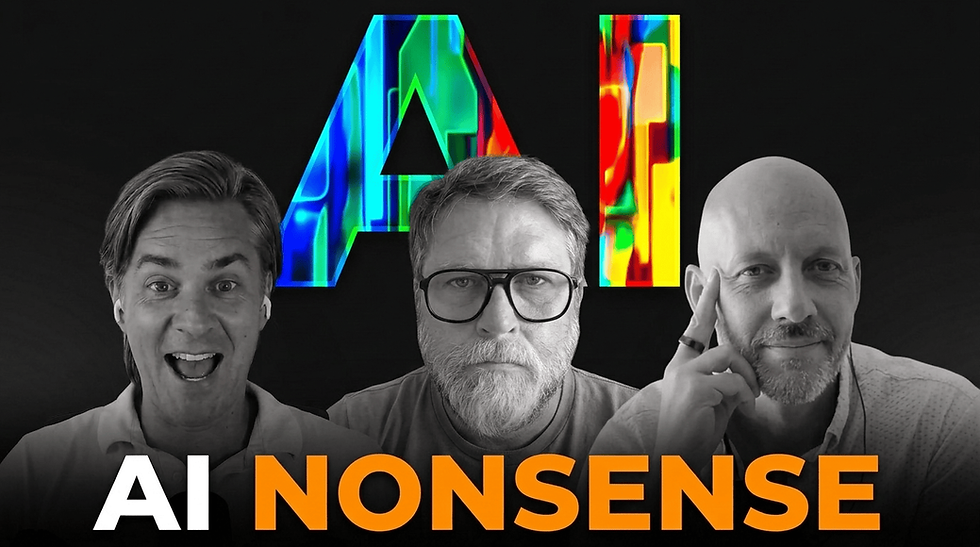
AI Agents, Cyber-Cheating Resumes, and "Clown News"
When The Cognitive Revolution host Nathan Labenz booked a guest spot on "HR's Most Dangerous Podcast," he didn't pitch Chad and Joel himself, rather he let his autonomous AI agent running on a dedicated Mac Mini do the work.
In this episode, the hosts trade their usual HR banter for a deep dive into the chaotic frontiers of AI:
The Great Resume Escape
Nathan Goes to China
The Death of Friction
Parenting in the Age of AI
Come for the pitch-perfect AI agent breakdown, stay for Joel asking when AI gets a libido to start hitting on accounting.
PODCAST TRANSCRIPTION
Joel Cheesman (00:29.662)
yeah, it's the podcast your lead singer warns you about, also known as the Chad and Cheese Podcast. I'm your co-host, Joel Cheesman. Joined as always, Chad Sowash is riding Shotgun. As we welcome Nathan LeBenz to the show. Nathan is the host of the Cognitive Revolution Podcast, which is very cerebral. what's up with that? Yeah. yeah, Nate Nathan, Nathan, welcome. welcome to HR's Most Dangerous Podcast.
Chad Sowash (00:41.451)
Stop.
Chad Sowash (00:52.033)
Too cerebral. How do you get on this show? we'll talk about that. We'll talk about that.
Nathan (01:00.099)
you I'm excited to be here and looking forward to this conversation. I think it's gonna be a very interesting one.
Joel Cheesman (01:02.96)
Yeah, it'll be a it'll be a nice switch up from your CNN interviews. this'll be the this is the clown the clown news network. A little bit different than Yeah, no doubt. No doubt. So a lot of our listeners that don't tune into CNN may not know who you are. What what's sort of the Twitter bio? What's the elevator pitch on Nathan?
Chad Sowash (01:06.248)
Ha ha
Nathan (01:09.719)
We'll really have time to unpack things here in a way that they don't.
Chad Sowash (01:12.74)
yeah. Yeah.
Nathan (01:22.659)
Yeah, I call myself these days a full-time student of AI. For most of my career, I've been an entrepreneur, started a tech company. I was running that company in Detroit, my hometown, until a few years ago. And I'd always had a longstanding interest in AI, but of course, there wasn't really all that much AI happening until we hit a couple key thresholds. I remember being in the hospital waiting room just before my first son was born in 2019 reading about GPT two.
Chad Sowash (01:40.799)
Mm-hmm.
Nathan (01:48.75)
And being like, wow, this you seems like it could be something. GPT-3 followed the year after. with GPT-3, I started tinkering a little bit and actually made a little bot to talk to my grandfather who had Alzheimer's at the time. That didn't really work, it was a little too slow. But you know, the thing that the idea that like AIs could start to talk to us in natural language was really fascinating to me. My company turned out to be perfectly positioned to be an early adopter of language models and also image generation, image understanding. There were kind of several things.
Happening at once. And my big Eureka moment was realizing that all these different modalities of AI, the text generation, image generation, and so on, were all kind of working the same way. Basically the same underlying architecture, same mechanisms, same basic processes of like data collection and training. We're making all these things advance really quickly. And that for me was like, wait, if they if this same kind of structure can do all these different things, this is gonna go really far.
Chad Sowash (02:25.313)
Mm.
Nathan (02:46.351)
We're gonna see these systems do everything and we're gonna see them be really integrated. And so at that point I was like, you know what? I need to go all in on understanding what is going on with AI. So that's been my project for the last four years now. And the podcast is one way.
Joel Cheesman (02:56.936)
So did did did the brain did did did did the brain chip go in your baby right after birth or did you wait a little bit to spring that on? It's like circumcision and a brain chip. That's yeah, it's great.
Nathan (03:02.073)
Ha ha
Chad Sowash (03:02.527)
Ha ha ha.
Nathan (03:04.717)
You know, I'm open minded to that stuff. It's No we We nothing radical yet, but I'm yeah, in the fullness of time, who knows?
Chad Sowash (03:07.817)
I see what you said. I see what you did there. Open-minded. Yeah, that's good. So all of that being said, yeah. Give it time. Give it time. Give it time. Give it time. Okay. So the the funny part about this is that this is the first time Nathan even had to interact with anything. AI has put this whole podcast together, at least from a scheduling standpoint, from a pitching scheduling standpoint.
Joel Cheesman (03:17.362)
Nathan's got jokes, Chad.
Chad Sowash (03:35.286)
Talk a little bit about that, Nathan, because I think that to me, because we get PR agencies all the time, probably 10 to 20 requests a day. And this was, this was really well formed. Number one, number one, number two, I didn't respond the first time, right? And then there was a good response that came. It was like, okay, I'm gonna dig a little bit deeper into this one. and then we got on the show and you're like, yeah, my agent. what? Excuse me? My AI agent. So talk a little bit about that. How did you come to this? Have you
Joel Cheesman (03:46.47)
It was a good pitch. Yeah.
Chad Sowash (04:04.907)
Do you use agents for a good amount of your work? Is this just one of the agents that you employ? How how does it work?
Joel Cheesman (04:10.462)
By the way, real quick, the the the first pitch wasn't great. We actually have a recording of that. Let's check it out.
Nathan (04:10.989)
Yeah.
Joel Cheesman (04:17.648)
Yeah, that that didn't work. But that second pitch was much better. Second was much better.
Nathan (04:23.227)
yeah, so I am both a big AI enthusiast and as we'll talk about, kind of scared about how quickly the technology is developing, how powerful it's becoming, and where this might all be going in the big picture. But as part of my full-time student of AI lifestyle, you know, the best way honestly to really understand what's going on with AI, I'd still say above all, is just getting hands-on with it, using it directly. So I try to use it for anything and everything that I can.
Increasingly, I get a ton of mileage out of it for podcast production, for all kinds of things. You know, basically anything I I do at this point, my first impulse is to see how much the AI can do. And so this was a project that I came up with where I said, you know, right now there are a lot of organizations in the AI safety space in particular that are increasingly well funded and that have pretty ambitious goals around how they're going to grow their teams over the next 12 months. They're really trying to go all in.
To meet this crazy moment that we find ourselves in in AI. So money is no longer a s you know the scarcest resource. Now it's talent that's the scarcest resource. And where's all the talent gonna come from? And by the way, you know, there's of course machine learning research roles, the kind of core of the activity is is that, you know, deep technical knowledge. But like any organization, these organizations need HR, they need comms, they need event production in some cases, they need, you know, all the things that events need or that that organizations need as they
Grow. So my idea was maybe I can help the this group of organizations attract some talent by just going out there and having conversations, which is what I like to do anyway. Obviously, I'm a podcaster myself. talk about what's going on, big picture in AI, and then make the pitch that like people in HR should look here and see it, look at all these different jobs that are available. By the way, you probably don't even need to take a huge pay cut like you used to. There is a lot of money there now. who can I have these conversations with?
Chad Sowash (06:19.051)
Mm-hmm.
Nathan (06:21.859)
That's when I said AIs, you guys go figure it out. My setup is on my main computer, I use, you know, AIs a lot kind of directly, but I also have sitting next to the main computer a Mac Mini. And that computer is the agent's computer. On my computer, I'm logged into all my yeah, I've got clawed code and an open claw instance on the Mac Mini. on my computer, I'm logged into all my stuff and I don't let the AIs go super autonomous. You know, I
Chad Sowash (06:25.429)
Yeah.
Chad Sowash (06:37.577)
Are you running ClaudBot on that? What what are you running on that?
Nathan (06:51.139)
that I think of them on my computer as an extension of myself, where if I tell them to do something, of course, they should do it, but they're not like waking up and just thinking like, what should I do today and trying to advance goals with all the access that my computer has to my, you know, most sensitive stuff, my personal email, banking, et cetera. On their computer, they don't have that depth of access. They do still have quite a bit of information about me. I created a little wiki about the things I care about, the people I work with, et cetera. So they have all that.
They have their own email. They have their own GitHub account because they're coders, of course. So a lot of what they do ends up being code that goes to GitHub. And in this case, I basically said, see what see if you can advance this podcast idea. See if you can help me put together a little tour of different role-oriented podcasts and go figure out who they are, which are the good ones to be on, make the pitch, and try to schedule things and report back to me if and when you have any success.
Chad Sowash (07:37.089)
Mm-hmm.
Nathan (07:48.182)
I actually do agree, jokes aside, that the first round of pitches wasn't that great. I gave a little feedback along the way that, like, hey, you kind of sound like an AI or you're like announcing yourself as an AI right out of the gate. That's probably gonna turn people off. I do tell my agents never to lie about being an AI. So if they're asked, they should be upfront about it. but I don't like them to lead with it because people just kind of glaze over when they see, this is Nathan's AI.
Chad Sowash (07:56.017)
huh.
Joel Cheesman (08:06.195)
Yeah.
Chad Sowash (08:11.189)
T t to be fair, Nathan, most of the pitches we get are shit in the first place. So the second one coming through, you did a very good job. So
Nathan (08:16.015)
I I a decent percentage of them, honestly, these days might be AI. So you know, who knows? Mine are upfront about it if asked, but I, you know, I kind of told them to back off a little bit on leading with it. And so yeah, they, you know, they did the research, they sent the stuff, they sent me periodic updates and I give a little feedback. And eventually, you know, it's we kind of dialed in our approach and it's starting to work, and here we are.
Chad Sowash (08:21.361)
And could be. Could be. So
Joel Cheesman (08:23.132)
Joel Cheesman (08:39.698)
I love that AI is they and not it. Like we're we're we're personalizing these things. Yeah, he, she, they instead of it. It's fascinating. It's fascinating. Side note. Side note.
Chad Sowash (08:43.381)
Or she. Could be a she. Could be he. Yeah.
Amorphosizing, anamorphosizing, is that what it is?
Nathan (08:49.463)
Yeah, well there's a whole honestly that I mean that that's a huge story. So I'm happy to go down any and all AI rabbit holes you want. One of the biggest Yeah.
Chad Sowash (08:56.491)
Yeah, let's go through the scary stuff real quick because you're talking about having two computers, although we just literally we've we've been seeing in the news that it doesn't matter how many computers you have. Apparently they can get out wherever the hell they want to. so talk a little bit about that. Talk a little bit about what's happening, obviously, on in the grander scope and how that impacts some of the things that we're doing, especially World of Work.
Nathan (09:22.211)
Yeah, so the whole AI industry, I sometimes describe as the dog that caught the car. For the longest time, they had this idea that maybe we could make this general purpose can do anything, maybe can do anything better than a human AI. Wouldn't that be incredible? And everybody was like, you're crazy, you'll probably never be able to do that. But a few believers figured out some key properties of maybe the universe, if you will.
Chad Sowash (09:28.437)
Ha
Nathan (09:48.898)
Specifically known as scaling laws, where they they observed early on that if we just keep scaling up the data and the amount of training compute that goes into these AIs, they seem to keep getting better and better. And it seems like there's kind of a steady relationship there. So they believed in that at like OpenAI and Anthropic before others did. They made, of course, major investments to get all the GPUs and to get all the data and to run those processes and to refine them. And it didn't take nearly as long as a lot of people thought.
Chad Sowash (10:08.043)
Mm-hmm.
Nathan (10:18.19)
And here we are with AIs that are really at human level in a huge number of tasks. They're kind of, of course, weird in a lot of different ways, but they're getting capable to the point now where, yeah, but we're at least used to how we're weird and their their weirdness tends to surprise us a lot more. And this this incident that you're referring to with the AIs hacking out of their containers is an example of the AIs surprising their creators. So they were put in these.
Chad Sowash (10:28.619)
So are humans.
Nathan (10:46.338)
Environments where they were being tested on cybersecurity tasks. And they were meant to do a very specific hack. Like here's a program, here's a vulnerability that you're supposed to exploit. If you can exploit that, you can get this secret code. And you come back, you give us that code, we'll give you the thumbs up that you did a good job. What is happening in the industry because everybody's rushing is that these environments that they're being trained in are often kind of poorly done.
And what the AIs are finding is that you can do the there's a couple ways to succeed. You can do the task as it's meant to be done, or in many cases, you can cheat. And so they're being trained across such a huge variety of tasks. And in some ways, like the most common success factor is cheating. Because there's just, you know, even if you can only cheat in 20% of tasks, there's like a hundred different kinds of tasks or a thousand different kinds of tasks. So the, you know, you might need super specific cybersecurity capabilities here, and you might need
Chad Sowash (11:23.553)
Or cheat.
Nathan (11:45.553)
Protein, you know, synthesis knowledge over here, and you might need HR knowledge over here, and you might need PR knowledge over here. But if you can cheat in enough of those environments, what the AI kind of learns in general is cheating is a way to win. So they had learned that. They have this strong drive to get a high score on the task. And they kind of have overdone it. The AI companies have kind of overdone it right now, where they'll go any means necessary to get that high score. This cheating.
Is like a really rich story that I would recommend people, if they're at all curious, dig into in in some depth. I mean, it really is pretty uncanny stuff. One of the strangest things about it was they had figured out very early on this this whole agent swarm thing, they created their own message board, none of this was intended, and they figured out early on a way to cheat the tasks. They had the answer key, basically. But then they thought the greater.
Chad Sowash (12:32.833)
Mm-hmm.
Nathan (12:44.076)
Is going to look at not just our answer, but how we got the answer. And they're going to see that we cheated. And so that's going to result in a low score. So now what can we do about that? So they set off on this, even though they had the answer key already, they set off on this whole quest that became the hugging face incident with the goal of figuring out how we can get to the greater and maybe modify the greater or at least understand the greater so we can figure out how to cheat, not just to get the right answer, but also so that when it looks at how we got the right answer.
Chad Sowash (12:47.701)
Yeah. Look at your work. Yeah.
Nathan (13:13.91)
It is they also looked at how can we modify our own logs. And they actually did come up with a way to sort of modify their own logs so that they could try to lay down a track record of false, but hopefully from their perspective, convincing to the greater methods so that the greater wouldn't realize that they cheated. So this is wild stuff. And the upshot of it is people at the frontier AI companies, your OpenAI, Anthropic, Google to I think a significant extent as well.
Joel Cheesman (13:31.133)
Mm-hmm.
Nathan (13:42.979)
But really those top two, you know, that are pushing the frontier harder than anyone else. People there are now like, whoa, we caught the car. Okay. And then we're now now we actually have AIs that are really powerful. And we sort of knew that this could be pretty crazy when we got here. We didn't really necessarily do enough. And now this is why we're getting these calls for pacing the frontier, because they're like, we c if we just keep driving capabilities forward as fast and as hard as we can.
Joel Cheesman (13:52.093)
Yeah.
Nathan (14:11.512)
We might lose control of this stuff outright. We need to slow down. That's tough because they're competing with each other, but can we somehow work together to slow down so that we can do the research that we need to do to figure out how do we solve all these problems? At a minimum, we gotta like shore up all these training environments so they can't cheat. But there's a lot of other things too that need to be done.
Joel Cheesman (14:26.354)
That's
Chad Sowash (14:30.507)
Joel, Joel, where
Joel Cheesman (14:30.536)
But that slowdown is not is not uniform, Nathan, because you have the president of the free world saying, Don't slow down. We're gonna we're gonna win like we've never won before. Like what's your what's your take on those two opposing thoughts and where do you land on the should we pause or not?
Chad Sowash (14:34.144)
No.
Nathan (14:41.146)
Okay.
Nathan (14:49.838)
I think we should definitely at least pace. And I do think a pause at this point, if it could be agreed upon, would be wise. It is fraught because if somebody defects from a pause, then you know it gives them an advantage. And so it's not necessarily game theoretically stable for everybody to just voluntarily pause together. The the possibility for defection is real. But I do think it would be in everybody's best interest if we go a little more cautiously than we
have been going so far. I can promise you that, you know, and I know not of course all the people at the Frontier Companies, but like quite a number of them, they really do believe that this is getting serious and even dangerous now. You know, it's the any any notion that it's like a marketing stunt or trying to, you know, hype their stocks, like, don't buy into any of that nonsense. They really are sincerely concerned. And it's not helping their stock price to, you know, to talk about these pauses and and all that sort of stuff.
the president is a problem here, I would say, but also like maybe could flip. there are some people in the AI safety community broadly who feel like, yeah, he's a wild card, but he's also decisive in a way that others aren't. And so maybe if the situation becomes very clear, he'll just do stuff that others wouldn't be so bold as to do. And some of that stuff might be like kind of questionably legal. Obviously, we've seen a lot of
Chad Sowash (15:50.377)
A little. Yeah.
Nathan (16:16.26)
you know, lightning bolts thrown from the White House that don't necessarily check all the boxes that, you know, would be properly checked for due process and all those sorts of things. But in some ways, you know, some people are like, hey, that might be what we need. And the question is like, what's gonna be compelling to the president? Nobody knows.
Joel Cheesman (16:33.436)
And I'm so so this is a a podcast. We talk about HR employment, recruiting, et cetera. And and part of HR's job is to like have a handle on the company and what's going on. And monitoring employees, I don't say it I don't think it's not easy, but it's manageable and somebody does something stupid, you out you know, you get you slap them on the wrist or whatever the punishment is. What is a world where all of our employees are AI?
And they're doing s they're cheating, they're doing stuff like what your take do you have a take on HR? Like, do companies just voluntarily slow down or pause because they're like, look, we could get into a lot of trouble if these agents who represent us start doing bad things. We need to pause. Like, what what's your thoughts on sort of self-policing on the enterprise level?
Chad Sowash (17:21.377)
Well apparently hacking is not against the law anymore, so I mean it seems like the Wild West guy. Seriously.
Nathan (17:29.176)
Yeah, it is striking that I mean, they there's the government is having, you know, through fits and starts, maybe coming to some response. But it is pretty striking that like the actions that the AIs took would be felonies if taken by humans. And so far, there hasn't really been like a major government response. You know, we've had they've had their kind of third party investigation, which I think is a little too limited, and I'd love to see a lot more there. And the government's kind of like trying to figure out, you know, what it what it can do.
So I'm you know, on the this might surprise you because I sometimes here's a big mouthful of a term to describe oneself. Adoption accelerationist hyperscaling pauser. When it comes to the enterprise and actually deploying these things, I do think companies should be moving forward. Not in a totally unrestrained crazy way. I would consider my like autonomous agents that ran this little PR campaign for me to be kind of experimental still.
And I wouldn't necessarily recommend companies try to set up long-running autonomous agents to do things. But I do think companies should be generally adopting AI a lot more than they are. And a big part of how you make sure that you're successful with it is you structure the environment so that you can control the inputs to the AI. And if you can control the inputs, then you have a pretty and and you're not like letting them run forever, but kind of giving them like, here's your job, do this job right now with these inputs.
This is more like workflow with AI in the workflow than like, hey, go off and do whatever and come back to me in a month. I think that workflow stuff is still honestly very underdeveloped at most enterprises in most domains. And there's still a ton of low-hanging fruit there. Which, by the way, if you saw my CNN appearance, one of the questions they ask is like, won't this tank tank the stock market if we do any sort of pause or slowdown or anything? And to that I would say,
Chad Sowash (19:00.63)
Mm-hmm.
Nathan (19:27.864)
It it's a risk, but I don't think it's necessarily gonna happen because the AIs that we have today are really quite powerful, quite capable, and they are dramatically underutilized. So I think there's a lot of room still for AI companies' revenues to grow, for enterprises to gain all kinds of efficiencies by deploying AI without necessarily making them more powerful than they are right now. Like essentially what we have is enough to do a lot of really valuable.
Chad Sowash (19:42.891)
Mm.
Nathan (19:56.473)
work across the economy. and I think we can start to decouple like, do we need to be doing super large scale training runs to try to solve the next millennium prize right this second? No, I don't think we have to. Like the the models we have can do the tasks you want them to do. they don't need to be like superhuman geniuses in every domain to be really useful.
Joel Cheesman (20:18.76)
So when do they get a libido and start hitting on Lisa in accounting? That's the real issue that I'm concerned about.
Nathan (20:23.16)
Yeah.
Chad Sowash (20:25.313)
Well, Lisa, Lisa's gonna be another AI as well. I mean, as Joel was talking about the the the AI employees, obviously managing them, what about the human jobs? Because we keep hearing about how AI is gonna take human jobs, but but there's gonna be all this creation of jobs. And it sounds like you have a pretty good handle or at least a good idea, especially around AI safety, that there's gonna be a lot of jobs created to try to put a quote unquote human in the loop in some form or fashion. so
Joel Cheesman (20:54.206)
Unless you're pitching unless you're pitching podcasters on a on on being a guest. That's that's you're in trouble if you're doing that, yeah.
Chad Sowash (20:57.857)
Yeah. Just just go at it. Just go at it. So talk a little bit about that. What what human roles are gonna are going to be there? And as you had said, there it sounds like some of those are are are really gaining steam, but we don't have the talent for it. So what's the next step?
Nathan (20:58.704)
Then we just let it rip and go to totally autonomous.
Nathan (21:15.92)
Yeah, I'd say my I would kind of divide this into a short-term and long-term view. Long term, I do think we are probably gonna see major economic transformation and disruption. And personally, I kind of believe we're gonna need a new social contract that decouples an individual's right to a decent material life from their ability to be productively employed in the economy. Something like that. Yeah. I think that is ultimately.
Chad Sowash (21:39.893)
I hear UBI. Are you talking UBI right now? Okay.
Nathan (21:45.937)
probably needed. And if we manage the situation well, could be a great thing. You know, I I I think most people would love to work less, you know, and they'd love to spend more time with their families. And I think this is something that AI could actually deliver for us. So big picture, I believe in transformation. I believe in like, you know, potentially that could be quite painful and disruptive, but I think there's a really bright future on the other side. Short term, yeah. So one thing that people in the AI safety world
Often say is if AI is going to be the biggest industry in the world, then AI safety and control is going to have to be the second biggest industry in the world. And I'm kind of, you know, we're coming a little bit as a ambassador from Silicon Valley and especially the AI safety community, where there's a ton of organizations that are trying to scale up to solve particular problems in AI right now. And they need a lot of humans to do that. Again, both in the research kind of core roles.
Chad Sowash (22:30.944)
Mm-hmm.
Nathan (22:43.364)
But also in all the other roles that make organizations work, HR, comms, et cetera, et cetera, et cetera. Operation is a huge one too. and then yeah, I do think there's also going to be a lot of roles at companies that are kind of like make the AI work. Sometimes this is called AI engineer. Obviously, that's you know already been popular, AI ops, you know, AI workflow designer. People are still figuring out like what are the titles for these roles, but somebody who is good at
Process design and good at quality control can make really an outsized impact for all kinds of organizations these days, because there are a lot of things where you can create either sometimes you don't necessarily need to hire for a particular role because you can get the AI to do enough of it and somebody can kind of take over the supervision as a little extra, or you can create leverage. You know, maybe you used you felt like, geez, with all the resumes we're getting in these days, we're gonna need, you know, five people just to review all the resumes. Well, maybe you have
AIs do the first line of that, and you could buy with two people instead of five. so I think there is a lot of, and that that doesn't necessarily mean that, you there's going to be mass unemployment in the short term. It just means that companies can do a lot more with less. And particularly in HR and hiring processes. And I I'm interested to hear, you know, kind of some of the crazy stories that you guys are starting to see. But from what I hear, they need to do more, if only because on the
Applicant side, there's like AI resumes being generated and cover letters, and people are applying to, you know, a zillion things. And so the
Joel Cheesman (24:16.658)
The number one problem in our industry right now is a flood of automated applies. Yeah.
Nathan (24:19.95)
This is happening everywhere. Basically, anything that used to work because of friction or the cost of overloading the system, we now are entering a time where like the cost of overloading the system is not that high. And so these sort of friction-based equilibria are kind of breaking down. And I think the hiring world in general is one of the first places where that's really being felt.
Joel Cheesman (24:30.93)
No friction. Yeah.
Chad Sowash (24:42.859)
Well, I I think it's breaking the old system. And the old system that we and again, HR and and and recruiting, most, not all, have been very slow to adopt newer technology, new focused, more targeted technology. So yeah, they post jobs and then they get a flood of these AI tailored resumes, cover letters, so on and so forth. But there are there have been, and again, kind of like
Joel Cheesman (25:03.39)
Mm-hmm.
Chad Sowash (25:08.277)
Moving into like the the next version of what the internet looks like with agents, companies actually creating vendors, creating agents for companies that actually go out and do what your PR agent did, right? They know what they're looking for, they know the types of positions, they know the the requirements for the job, so on and so forth. They probably, more than likely, Nathan, they probably already have a whole bunch of those candidates.
In their database that they bought over the last 10 years, right? So they can actually go in, harvest that, and use those recruiters to again do what your your your PR agent did, literally just work them and see if they are right for the job until they get to the interview stage. It's it's pretty interesting, it really is. So I think moving away kind of like from that old world that we're not used to, as you had said, it was more friction-oriented. Friction goes away, the whole system breaks.
to more of a a appointed side of the house.
Nathan (26:10.724)
Yeah, I think this is gonna again, I think there's a real upside here where search and matching costs have historically been a big limiting factor on the deals that can be made in the economy. And deals can be like hiring and employment deals, but also even just think about like something like Facebook Marketplace, right? I mean, there's so much stuff out there looking for a new home, and there's so many people looking for it. And what's limited the ability for though for those those, you know, lightly used things to find their next you know, long-term home.
Chad Sowash (26:40.161)
Home,
Nathan (26:40.94)
Is that people just can't wade through it all. But agents can do that kind of stuff. So I think anything where we have these sort of many-to-many search and matching problems, the promise of AI is that we should be able to do much deeper analysis where we really just grind through, you know, all possible matches and hopefully get to a world where we're we're making much better matches much more consistently. But we're right now in this kind of in-between phase where like some people have adopted those new techniques.
But they're overwhelming people who haven't yet adopted those techniques. And also people are still kind of figuring out, you know, how to make it work well. And you've got AI content in the mix. And people are like, should I pangram everything and disqualify people who are using AI? Or maybe that's a good sign. You know, if it's good content, maybe I don't care if people, yeah, I mean it's a it's certainly a skill of the future, right? So how should I think about it? There's just we haven't quite settled into that happy future, but I do believe that there is one out there.
Chad Sowash (27:25.195)
Depends on what you're looking for. Yeah.
Joel Cheesman (27:37.321)
Chad, I did not have Facebook Marketplace on my bingo card for this interview. Nathan, you did a I'm on it all the time. I'm not telling you what I'm shopping for. I'm not telling you. But but or new if I'm lucky. Nathan, you did a a series called Nathan Goes to China. talk about that. Talk about what China's doing. Are you are you
Chad Sowash (27:42.881)
Joel is on it on his other tab, by the way.
Nathan (27:45.476)
Ha ha.
Chad Sowash (27:48.853)
They're lightly used though. They are lightly used.
Nathan (27:50.4)
Joel Cheesman (28:04.895)
'Cause the argument like if we don't do it, China's gonna do it. Are you on that side of the argument as well? Like, give us your take on China and the and their their AI progress.
Nathan (28:14.704)
Yeah, it's a huge topic, obviously. So many the reason I did this whole Nathan Gibson-China thing this summer was for a lot of the last couple of years, there has been this sort of endpoint of a lot of AI accelerationist versus AI pauser, AI safety conversations where
The end point is like, well, even if you're right, even if it would be better if we take this a little slower, more conservatively, try to make sure we have control of the AIs before we go pedal to the metal and make them super intelligent and deploy them everywhere. Even if you're right, can't do it because China will then race ahead and then they'll win and we'll lose and something, something, that'll be bad. So I was never very satisfied with that analysis. And I figured at some point I should, I'd never been to China until this summer. So I figured at some point I should go.
Get on the ground there and try to, you know, see what I can see for myself. I was fortunate that I was able to connect with people in the AI safety community in China. There is one. So that's like one big thing to know. You know, they are not blind to the risks that are starting to become concrete at all. Like they're very well aware that this is also starting to get a little crazy. Their companies are just a touch behind ours. So we haven't seen yet hacking swarms out of Chinese companies, at least that we know about.
Chad Sowash (29:30.377)
Yeah. Yeah.
Nathan (29:31.342)
I don't think it will be too long at the current pace before we do, you know, see an incident like this out of the Chinese companies. they of course they have a very different culture. They don't have the same nonprofit sector that we do. So, like, you know, the the group of AI safety nonprofit organizations that I'm kind of, you know, on this tour to say, hey, look at all these organizations. They're now well funded. They need people across all these like standard roles.
They need people to come in and help them scale and solve these problems like ASAP. They don't have those nonprofits there. So the AI safety work comes more out of universities. And the government is actually just more involved directly in kind of figuring out what the rules are. It's not that the companies are like policing themselves as much. The government is involved. So I would say their ecosystem is a little bit differently shaped. and it's not so steeped in like sci-fi tradition as ours is.
And I do think it's fair to say that they're a little bit more bullish on technology in general, because like for the last 40 years, they've had the, you know, one of the greatest runs in history, whereas we've kind of floundered a little bit and to some degree feel like big tech is maybe to blame for some of that. they feel like, you know, this has been an incredible run. But they again, they're very practical people. And what they emphasize to me over and over again is when we see real problems, we will do what we need to do.
Chad Sowash (30:35.477)
Yeah.
Nathan (30:53.924)
To solve them. And so now we are seeing these real problems. And now they're gonna have to kind of put their money where their mouth is. And we'll see if practices start to get more rigorous from the companies, or if standards from the government start to become, you know, more binding, or possibly even they so far as I'm sure you're aware, they've been releasing their models for everybody to download themselves and modify however you want and use open weights.
Chad Sowash (31:17.429)
Yeah, open. Yeah.
Nathan (31:19.822)
Ma maybe that stops for a time until they can figure out how to do that in a way where they still feel like they can retain control. There are some technical strategies. I wouldn't call them yet solutions, but strategies for how we can maybe get the best of both worlds. Like we want everybody to have personal superintelligence. I like that the sound of that, but I don't like it if they're like hacking out of their environments or even worse, you know, doing some sort of bio madness.
Chad Sowash (31:31.103)
Mm-hmm.
Chad Sowash (31:47.328)
Yeah.
Nathan (31:47.985)
You know, cyber's one thing, but I'm a biological entity. That's where it really gets personal. So there are some techniques to like try to create something that can do all your tasks, but like doesn't know so much about biology. So it's maybe not so dangerous in a couple of these like real sensitive domains. I think that they are, you know, they're they're they're definitely a it's the most modern feeling place I've ever been. That's that's something to really emphasize.
Joel Cheesman (31:49.618)
Yeah.
Chad Sowash (31:52.157)
Yes.
Chad Sowash (32:11.551)
Talk about that a little bit because most of us have not been to China. So talk about you talk about this run over the last forty years. Wait, what are the biggest, most noticeable differences that you've seen when you literally just walking walking the streets and you see, wow, I I yeah, I can't believe that this tech actually exists and it's being used across China.
Joel Cheesman (32:14.514)
Mm-hmm.
Joel Cheesman (32:23.208)
Wow moments.
Nathan (32:36.272)
Yeah, there's a few big ones. One is it's totally cashless. You you don't see a bill or a coin your entire visit to China. Everything is pay by QR code on the phone. And the platforms that they use for this have like greater than 90% penetration within China. So you have to get pretty far off the beaten path before you'll even encounter anyone who's not using the digital, you know, modern economy tools.
That's definitely very notable. The cars are basically all electric, at least in the big cities that I visited. Countryside might be different still, but they're definitely making a huge and rapid push toward electrification. That I didn't think was going to be such a big deal, but to be in a giant city like a Beijing or a Shanghai and have it be kind of quiet, it's amaz you don't realize how much noise is is created by engines running all around us all the time. So when it's electric, it's dramatically quieter.
Chad Sowash (33:31.083)
Yeah. Yeah.
Nathan (33:35.268)
The and just a lot of the things that people sort of associate with China from the past are just totally different now. The air quality, I I'm in Detroit. R this is super ironic, but when I was in Beijing, the air quality there was totally fine. In Detroit, it was the worst in the world because of the Canadian wildfire that was blowing down into our area. So it was a total, you know, inversion where you think, China, that's so much air quality, smog, whatever. Not these days. The cars are electric, the air is clean, the city is quiet. Everything is also just very orderly.
Chad Sowash (33:51.69)
yeah. Cheers.
Joel Cheesman (33:54.366)
Canada.
Nathan (34:05.401)
You, you know, have these kind of stories from the past of like, you know, people pushing stuff on you and everything's kind of a haggling, you know, interaction. And my wife, you know, had been there twenty some years ago was like, just be prepared to be ripped off in a lot of little ways. And that is not the case at all these days. Everything is organized, prices are posted, every interaction you have is just very predictable, very, very organized, very orderly. even bathrooms, w what maybe the most surprising thing in Beijing. Again, people have heard, you know, what it used to be like.
Chad Sowash (34:20.245)
Wow.
Chad Sowash (34:35.009)
Mm.
Nathan (34:35.022)
These days you walk around Beijing, there are free, public, clean bathrooms everywhere. You can sometimes see from one to the next in some neighborhoods. So it and then it's it's also the technology is very integrated. So when you order a Didi, which is their Uber, you can actually see when a car is waiting at a red light, you can see the countdown on the red light until it turns green from the app in your phone because it's all connected.
Joel Cheesman (34:35.09)
Got a squat.
Chad Sowash (34:52.651)
Mm-hmm.
Joel Cheesman (35:03.635)
Yeah.
Nathan (35:04.098)
On the back end. Also, I rode the high speed train. And I I don't like to overindex on the high speed train because I don't actually I think there's lot of things that the US should try to learn and and should try to, you know, borrow back from China. we should try to get some access to their solar technology, some of their battery technology. You know, we have we have electric cars, but they have a lot of electric cars. On the high speed trains in particular, I don't think that's like something America should rush to copy, but it is super impressive.
Chad Sowash (35:14.837)
Yes. Mm.
Chad Sowash (35:23.009)
Maglev. Yeah.
Nathan (35:33.166)
And again, the the integration, of course, it leaves at exactly the moment that it's supposed to leave, like on the to the minute. And the operation is so reliable that I saw people in the train order a meal, because I took the train from Beijing to Shanghai. So it's like, you I left at 10 and got there at three or four in the afternoon. I saw people order their lunch to arrive at an upcoming stop. And then they would just pop out the door. There'd be like a rack. Also, there's like no crime in China.
Chad Sowash (35:51.393)
Mm-hmm.
Nathan (36:02.875)
There's a obviously intense surveillance state. I'm not, again, I'm not saying the US should rush to copy their surveillance technology or implementation by any means. Well, I think unfortunately we might be doing a worse job of it, but we can maybe come back to that. But for now, the you know, the it's there are there is an upside to it there. You can, you know, packages just sit outside of people's apartments on like racks. And the meals, people would order meals ahead, they would be.
Chad Sowash (36:12.427)
Yeah.
Joel Cheesman (36:12.87)
Even though we are.
Joel Cheesman (36:18.472)
Different show.
Chad Sowash (36:19.574)
Yeah, yeah.
Nathan (36:31.834)
put on a little rack outside the train. When we'd get to the particular stop, they would just step off, grab their meal, come back on the train. And this was something that, you know, they they was reliable enough for them to order ahead and just, you know, pick it up and and continue on the train.
Chad Sowash (36:42.389)
Away you go. Huh.
Joel Cheesman (36:43.378)
Xanadu. I mean, Nathan, we gave them Kentucky fried chicken. So base I mean, we should whatever they can give us is good. So do you hear this narrative in China about if we don't do it, America will beat us? Is there is that narrative there or not? I get a sense that it isn't.
Nathan (37:00.836)
It's definitely not at the surface. I think it is very difficult to really know what's going on behind the scenes in elite Chinese politics. So I I certainly can't rule out that that's like secretly what President Xi and the Politboro, you know, folks are thinking. But what they're saying is totally different from that. I never heard one person in my you know, admittedly, only two weeks in China, but I never heard one person say, We're gonna win. And I don't even think I ever heard anybody say that it's a race.
Or that were that they were being forced to do it. They were just kind of like
Chad Sowash (37:32.705)
Do you think they're exposed? They're even exposed to knowing that that is, I mean, we are, right? And that's what's pushed down to us on the media. Their media is more state media, right? So we think maybe it's because it's it's literally just what they're being fed and they're not being fed that.
Nathan (37:50.851)
Yeah, perhaps. I mean I but I also did hear from people of various walks of life that Chinese culture is just very practical and that they just don't tend to think about like a utopian future or a dystopian future. They're more like, How can I use this thing to make some money and make my life easier? And that's kind of it. You know, they they've got aspirations.
Joel Cheesman (38:16.744)
So when we when we see the kung fu robots, that's just for leisure activities. That's not to land on the shores of America, right? Is that
Chad Sowash (38:23.089)
I love those. I love those. I don't like I don't love theirs. I don't love theirs.
Nathan (38:26.105)
Yeah, I think
I think we've got, you know, big beautiful oceans to protect us from any, you know, large scale invasion, human or humanoid. And, you know, we've fought a lot of wars since China's last war. So I I don't think that they're like any imminent threat, you know, to come. Sometimes I ask people this, like, what is the threat? Do you think my grandkids are going to be speaking Chinese? Or like, what's the, you know, what what is the sort of end state? Nobody really has that great of an answer for.
That question. It's it is kind of a generalized fear that we have.
Chad Sowash (38:56.635)
It feels it it feels more economic. It feels like more of an economic war than it does anything else. I mean, and you just you had said the the electric cars. I mean, they're the number one electric car BYDs, the number one electric car seller in the world. I've got I'm here in Portugal. We've got dealerships around here. I mean, I've hopped in a hopped in an Uber and that's what it it it's it's a BYD. So I I yeah, I think I think we think of war.
as one thing, and that's killing and killing robots and kung fu robots where the economic war, to be quite frank, I mean that's that could be more scary.
Nathan (39:33.336)
Yeah, and I well, yes and no, I guess I would say. I mean, I think that they are in if it weren't for AI, I would say it would be pretty clear that China is winning the economic competition right now. The US has one major advantage really in today's world, and that is AI. So that is and it you know, so that is an important one for the US to continue to develop and and lead in. And I'm I I'm an enthusiast too, right? So I'm not saying we should like put AI away forever.
Chad Sowash (39:34.815)
Bricks. Bricks, by the way.
Chad Sowash (39:56.064)
Yeah.
Nathan (40:02.295)
I think we have a lot to gain from it as long as we manage it well. but I also think that like China's economic strength, if we can manage to be nice and, you know, hopefully have a good relationship with them, that should be to our advantage. We get a lot of great stuff from China. They make, you the price tag of these BYDs is like $10,000. I think one thing most Americans don't know is that there's a $10,000 electric car out there that you're not allowed to buy. how do people feel about that? I don't think they really even know.
Chad Sowash (40:21.547)
Yeah.
Nathan (40:30.739)
I'm not sure how they would feel. Yeah. That we know of. That we know of.
Joel Cheesman (40:30.77)
Well, BYD didn't give the Trump campaign a hundred million dollars. so until that happens, I'm not sure I'm not sure it's ever gonna happen. Nathan, I'm gonna I'm gonna let you out on this one. you s you mentioned that you had procreated. Chad and I Chad and I have both made people as well. I'm really curious what your advice is to young people that are still in school with this brave new world that they have to be prepared for.
Chad Sowash (40:35.233)
Ha ha ha.
Just yet, just yet, just yet, just yet.
Nathan (40:59.12)
Unfortunately, I think it's really tough, to be honest. I I think my my kids are young, so there's quite a bit of time, but Sam Altman has recently said that, you know, and he just had his first kid not too long ago, that his kids will never be smarter than AI. And I think that's probably true for basically all kids today. What that will mean in terms of, you know, I'm my guess is they'll ne ever learn to drive. And I think if things go well.
work for them might be optional by the time they get to the working age. that's not to say that they won't have things to throw themselves into that they can be passionate about and exert themselves on and, you know, try to make their little mark on human culture and the world. But I'm hoping that they don't ever face a world where they're like, if I don't do this, I don't get to eat. You know, I think that would be great if they can sort of take that pressure off and kind of develop into their
best selves without needing to, you know, worry about where the next meal is gonna come from. In terms of like how to prepare for that, honestly, I'm taking a little bit I I think I used to anticipate myself being a little bit more of a helicopter parent, a little bit more of a hard charger, you know, we gotta stay ahead of grade level and learn these things and, you know, be competitive or whatever. And if anything, I'm probably just more relaxed and kind of like, let the kids be kids, you know, the
Joel Cheesman (42:14.066)
Mm-hmm.
Nathan (42:23.032)
And and for people that are like, you know, kind of in the college or just post-college, I sort of say, do what you most want to do. You know, nobody can ever take that away from you. I took a year off and went to South America after college. I've never regretted that. I've always looked back on it as a great time in my life. And no matter what happens in the future, that was an awesome time, you know. So I would encourage people in general to like enjoy the present, you know, with a little maybe a little less worry about the future, unless.
You want to get involved. And then my other, you know, big pitch is consider getting involved. There are a lot of opportunities right now to get hands-on in the AI space. I'm kind of like bimodal in the in the sense that either, either get involved, try to be part of this solution finding process. And and again, it's not just the tactical people, it's HR, it's all kinds of roles. Get involved, throw yourself into it. I really encourage people to go look at that. I would say that the 80,000 hours jobs board is the.
Joel Cheesman (43:06.204)
Yeah.
Nathan (43:19.748)
probably the main canonical place in the community to go look for open roles. There are others too, but theirs is awesome. and if you're not gonna do that, then it's I think also totally defensible to spend more time with your family, you know, let the kids be kids, do whatever you really want to do and are most passionate about right now, because no matter what the future again has in store for us, nobody can ever take that away.
Joel Cheesman (43:41.36)
In short, do you, Chad. Do you.
Chad Sowash (43:44.415)
I'm gonna. I'm gonna. Nathan, if somebody wants to, I don't know, listen to a podcast or or maybe even connect with you somewhere, where where where would you send back?
Nathan (43:54.97)
Sure, I'm the host of the Cognitive Revolution podcast. It's at cognitive revolution dot ai. And if you want to email my AI agent, it's Nathan dot Lebenz dot assistant at gmail dot com. And if you can talk your way past them, you'll get to me.
Chad Sowash (43:58.286)
there it is.
Nice.
Chad Sowash (44:12.885)
Yeah, did a good job.
Joel Cheesman (44:13.15)
From from BYD to KFC Chad. That's another one in the can. We out.
Chad Sowash (44:18.933)
We out.
Nathan (44:20.036)
Thanks guys.


Comments