


Recruiting's Trust Problem with Stef Nikitas

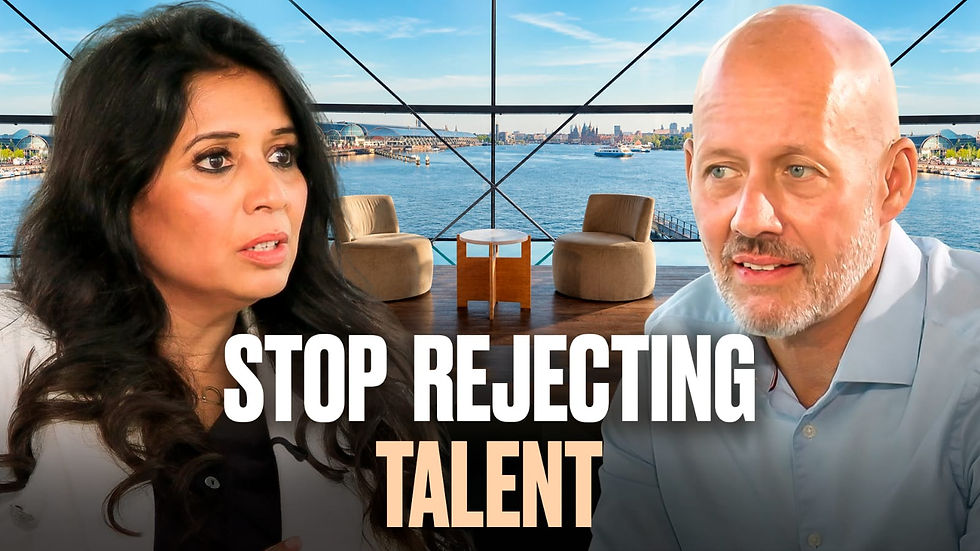
She spent 11 1/2 years transforming Ace Hardware into a model of modern, candidate-first recruiting. Then Stef Nikitas became a job seeker herself and got a rude awakening.
Stef sits down with Joel Cheesman and Chad Sowash for a brutally honest look at the modern hiring machine from the other side of the screen. Despite knowing every trick in the talent acquisition playbook, she quickly found herself navigating a broken system where "the human experience has left the building".
Listen or watch as Stef pulls back the curtain on:
The "Rose-Colored Glasses" Reality Check
AI Interviews & Data Grabs
The Speed Trap
If you're hiring, looking for work, or building HR tech, this episode is a must-listen wake-up call on why authenticity and basic human connection are about to become the ultimate competitive advantage.
PODCAST TRANSCRIPT
Joel Cheesman (00:24.398)
yeah, it's the podcast your government warned you about. It's the Chad and Cheese podcast, everybody. I'm your co-host, Joel Cheeseman. Joined as always, Chad Sowash is in the shotgun seat as we welcome Stef Nikitas to the show. She is an enterprise talent and workforce transformational leader. She's the former head of TA at Ace Hardware, and I think she's a super fan of the show. Stef, welcome to HR's Most Dangerous Podcast.
Chad Sowash (00:37.034)
Hello.
Stef Nikitas (00:40.138)
Hello.
Stef Nikitas (00:51.101)
I am.
Chad Sowash (00:52.128)
Think. What?
Stef Nikitas (00:54.442)
Happy election day. Thanks for having me.
Joel Cheesman (00:56.878)
Happ happy USIQ test day. Here we go. Here we go. Another step into the abyss. Let's do this. Let's do this. So, Stef, a lot of our people, you've been on the show a few times, our AI sessions, but some of our listeners, viewers, won't know who you are. Give us kind of the elevator pitch on what's going on in your life. What makes you tick?
Chad Sowash (00:57.088)
Happy election day, yes. We can only hope. We can only hope it's happy. We can only hope. Yes, yes.
Stef Nikitas (01:08.074)
Yes.
Stef Nikitas (01:19.412)
Yeah, so I have been in the TA space for about 20 years. spend the last ten, well, actually 11 and a half years at Ace Hardware, building, transforming, scaling a TA function from yourselves truly here as a part-time sourcer all the way up to director of talent acquisition. It was a fantastic journey and transformation. I'm leaving ACE hopefully in good hands after me. but I felt it was time for me to move on. You can only build so much and eventually it turns into.
maintenance mode, which is kind of where I found myself. So now here I am. Yeah.
Joel Cheesman (01:52.334)
So I I g everyone wants it's the elephant in the room. Like you left ACE. I think the I think the the default is people going, they got laid off. There was a big AI t you know, s cost saving measure. Like what what happened in your case? What was the decision to move on from ACE? 'Cause you had been there for so long.
Chad Sowash (02:04.159)
Thingy. Yeah.
Stef Nikitas (02:05.236)
Yeah, I know.
Stef Nikitas (02:10.282)
Yeah, I mean, being there that long, right? It like it's bittersweet, like it's comfortable. You know what you're getting, you know what you're doing, you know the players, you know the organization inside and out, which that part always is hard. But at the same time, like once you get to a place where you feel like you no longer and it it's gonna sound weird when I say it, add value in the sense of how you feel you're adding value because you've been on this train to transform and build and optimize and build a team. And at some point you get not necessarily to the finish line, but you get into that.
Chad Sowash (02:30.495)
Mm-hmm.
Stef Nikitas (02:40.256)
maintenance mode, it's a little bit of a culture shock, right? And so I decided like, okay, this is the time for me to find my next gig and see what other organization I can help push TA forward. Yeah.
Chad Sowash (02:50.933)
Yeah. When you're a builder, you're a builder, right? I mean, it's it's it's hard to become the maintenance man.
Stef Nikitas (02:56.956)
It is. Yeah.
Joel Cheesman (02:57.601)
Well, fortunately for you, it's super easy to get a job today and the economy's on fire and you're probably turning down offers left and right, right? Is that the state of state of job search right now?
Stef Nikitas (03:00.758)
Totally.
Chad Sowash (03:04.681)
Ha ha
Stef Nikitas (03:07.744)
Sure. totally. I mean, the economy is is better than it's ever been. Right. Right. No, it's actually quite the opposite. like I'll tell you because of the last 11 and a half years, having spent like all my effort and time outside of transforming, focusing on the process, on the systems, on the candidate experience, the brand and all these things.
Chad Sowash (03:12.063)
Wait a minute, I gotta I gotta do this.
Ha ha ha ha.
Joel Cheesman (03:18.765)
Yeah, yeah.
Stef Nikitas (03:37.521)
I think i in a in a way I was probably going into this with pink roses.
Being like, yeah, you know, like everybody's like Ace. And yeah, so I've kind of fallen on my face a little bit with that because I can tell you that we've worked on making recruiting easier to automate but harder to trust is kind of like really the central message here. But at the same time, I would say the process is still very broken. trust is definitely gone, and I would feel like the human experience has left the building in everything I've kind of witnessed over the last four to five weeks.
Chad Sowash (04:11.039)
Yeah. Well we've
Joel Cheesman (04:11.277)
I've heard it's like shouting into the void. Would you say that that would be Yeah.
Stef Nikitas (04:13.532)
It yeah, yeah. A little bit.
Chad Sowash (04:15.669)
Yeah, that's the the economy is definitely crash, that's for damn sure. So I mean let talk a little bit more about you know you you you had the journey and and and you know listener if you want to go to the sessions.ai, you can see Stef's in an entire series there. but kind of glaze over that a little bit and talk a little bit about going and building, right? And then and then
Stef Nikitas (04:33.994)
Yeah.
Stef Nikitas (04:41.033)
Mm-hmm.
Chad Sowash (04:43.421)
leaving and thinking that everybody is pretty much like Ace and everybody's been building and everybody's been, you know, they've all these great pieces of technology. And then what did you find? So kinda kinda take us on that journey.
Stef Nikitas (04:49.066)
Yeah.
Stef Nikitas (04:55.442)
Yeah. Yeah. So like for us that the importance of kind of that candidate experience and automation really came to play 2020, 2021, like many of us, ACE was an essential business. We really needed to scale fast because like within what was it, like 60, 90 days, we needed to hire like five, six thousand people across our DC network.
Chad Sowash (05:15.295)
So the pandemic really kicked you guys in the ass. Yeah.
Stef Nikitas (05:18.268)
It really did, literally. And like at that time, like we had processes in place that were probably okay, but we were not centralized. It wasn't one way of doing it. And so we created that hurricane committee, we love weather references, to kind of like centralize, create an employer brand, a recruitment marketing strategy, and really kind of like unify the function in how we go to market. And so that took us about
Chad Sowash (05:28.563)
Mm-hmm.
Stef Nikitas (05:44.981)
I would say for the for the basis six months to really put in place. And then I spent the next five years really pushing that function forward to get to the end of it, which was ace-wave hiring. It's our rec-to-check process to really standardize the experience for the recruiter, the hiring manager, and the candidate, which is really that triangle when you think of hiring. And in my
Pink Roses metaphor, I thought everybody focused on candidate experience, equipping and enabling their hiring managers and recruiters because that's all we've been talking about for the last five years. So when I started applying to jobs, all of a sudden you hear nothing or you get a disposition within 12 hours. And it's like like a application acknowledgement is not a candidate experience. It's kind of table stakes at this point, like yes, we received.
Chad Sowash (06:19.679)
Mm-hmm.
Stef Nikitas (06:37.09)
Your application, but then less than 12 hours later you get a misspelled email from said same ATS system that basically says thanks for applying, but we're not interested. If you're lucky enough to get that at all. Or you get the
Joel Cheesman (06:51.265)
Sounds like sounds like a banana in the tailpipe, Chad. Sounds like a banana.
Chad Sowash (06:55.005)
Don't they the the black hole still exists, still exists.
Stef Nikitas (06:57.416)
It does. It does.
Joel Cheesman (06:58.967)
So curi curious to so there are levels to this in my in my opinion, my estimate. Number one is like ghost postings. Are you seeing that first hand? What's sort of your take on that? Like what explain that to me and why do you think that's happening?
Stef Nikitas (07:03.231)
Mm-hmm.
Stef Nikitas (07:08.669)
god, yes.
Stef Nikitas (07:13.556)
So I think a a lot of it has to do with getting data from you, either to train the algorithm, to
Train the AI interviewer to make sure that it's asking the questions in the right way. Like, is it priming something, right? Like using you as a sample, so to speak. I've done two AI interviews. I have to say, one of them was actually really cool. It was very natural. it kind of asked the questions and then listened for the response and then would gear its response to your answer accordingly. So it felt like a true conversation. And then there was your typical one, like answers on the screen, you record yourself or you type in your answer and it moves to the next question.
Chad Sowash (07:52.202)
The higher view. Yeah. The higher so so yeah. So d d go ahead. Throw those throw those names out there. Do you know which vendor vendors they were?
Stef Nikitas (07:52.216)
Exactly.
Joel Cheesman (07:52.469)
tree, the decision tree. Yeah.
Stef Nikitas (08:00.788)
Yeah, I think one of them was eleven laps and the other one was higher view. actually it was the recorded one. The eleven laps one was more like intuitive and you could tell it was a contextual AI that was listening and kind of
Chad Sowash (08:13.705)
That's interesting.
Stef Nikitas (08:14.73)
based on your answers, but it felt very natural. It was calling me by name, it knew the position, certain things that I would say, it would pick up on that. Like that actually was a really cool experience. Now it wasn't for 11 laps, it was a company that utilized it, but what was interesting, within 24 hours of that AI interview, I got an email that the position's now on hold. So I was like, hmm, interesting. Okay.
Chad Sowash (08:23.696)
huh.
Chad Sowash (08:33.205)
Mm-hmm.
Joel Cheesman (08:38.413)
So it's so it's a data grab, essentially. Whether it's for marketing, whether it's for dispos or like data L L Ms. and it and like the there's the Mr. B story that came out recently where he had all these job posted and people were replying and they weren't really jobs, but he was taking all this data and then marketing to those folks. So it's kind of a free way to get a lot of people to give you their information. So I think what she said rings true.
Stef Nikitas (08:41.266)
I I wonder,
Stef Nikitas (08:46.6)
Yeah.
Chad Sowash (08:53.577)
yeah.
Stef Nikitas (09:00.181)
Yeah.
Yeah. And I think some of the jobs, like you can tell by the application process or the ATS that they're using, are those actual jobs because they're asking for barely anything. And then some applications, like I filled one out on Brass Ring yesterday. I was like, my god, this is like a 1980s interface. It was it was like even in the beginning in the inst like it had an instruction page. That how that's how you know it was from the nineties. Like
Chad Sowash (09:19.613)
Well, it's brass ring, yes.
Stef Nikitas (09:29.254)
And like the fonts and the the way the text was written. I'm like, my god, they really haven't updated this. And it said it's going to take you 17 to 19 minutes to complete this application. I was like, my God, really? I it ended up not taking me that long because I'm pretty quick at copy and paste, you know, like having a resume up and all that.
But my God, it still took probably 12 minutes to complete that damn thing. And then there's there are applications where it takes you less than 30 seconds to complete it. So it's it's such a delta of an experience. But then I'm noticing some applications, they get very in your business. Like to give you an example, like I was asked about sexual orientation. Am I a bisexual? Am I transgender? I'm like, what? Yes. Yes. I was questioning that too.
Joel Cheesman (10:07.43)
no no.
Chad Sowash (10:08.457)
What? What no wait is that even legal? I don't think that's legal.
Stef Nikitas (10:15.826)
It was part of the voluntary self-disclosure section and like, you know, the typical what g what gender are you and all that. But then it was starting to ask about sexual orientation and specifically if I'm transgender. I was like, what? Yes.
Joel Cheesman (10:20.129)
Voluntary.
Joel Cheesman (10:30.433)
She was like
Chad Sowash (10:30.833)
Wow. It's the it's the wild west out there, man. It's the wild west. Well, it's funny though, because you talk about brass ring, and brass ring is an old, old brand and an old, old platform. And they were literally just bought by Signal Labs, which is an AI lab. So all of I you almost think that the as you were talking about before, like with 11 Labs, are they using that data?
Stef Nikitas (10:33.238)
It is very inconsistent.
Stef Nikitas (10:44.286)
Yes.
Joel Cheesman (10:47.382)
Mm-hmm.
Stef Nikitas (10:47.732)
Yeah.
Chad Sowash (10:56.703)
to do any training whatsoever, which is which is interesting because to be quite frank, we've we've seen it through our entire career stuff. A lot of that data is unstructured, it's garbage, it's out of date. So it's it's it's really kind of weird to to see those kind of acquisitions and marriages.
Stef Nikitas (11:04.789)
Yeah.
Stef Nikitas (11:08.863)
Yeah.
Stef Nikitas (11:12.372)
Yeah.
Yeah.
Joel Cheesman (11:15.565)
Stef, if you had to break down, because I'm a little surprised you've only had two AI interviews. And granted, Chad and I live this and talk startups, I think we have the impression that it's like ninety nine percent are all AI. So if you and then you have like the other side with brass ring, if you could break down like AI is X percent, maybe chat bots are another percentage, and then sort of the old what we think of as old school, like ATS upload resume, like what how would if you had to break that down in percentages, what did what are you experiencing?
Stef Nikitas (11:20.799)
Yeah.
Stef Nikitas (11:27.872)
Mm.
Stef Nikitas (11:40.351)
Yeah.
Stef Nikitas (11:44.853)
I think for my level roles that I'm applying for, keep in mind I'm applying primarily for TA leadership roles. I think it's it's still some somewhat of the old school experience as far as the AI that I'm getting evaluated on hi is more behind the scenes once I'm in the ATS and get weeded out. the there are a lot of companies that utilize like the paradoxes of the world as part of like the application experience. So I would say maybe 30% of that is is available.
Joel Cheesman (11:50.198)
Yeah.
Stef Nikitas (12:13.922)
the rest really follows that traditional ATS process where you need to you know upload your resume and fill out every field which drives me crazy or create an account.
Joel Cheesman (12:22.729)
Okay. So eighty eighty twenty, eighty twenty, like everything else in life, kind of breaks down to eighty twenty. Okay.
Chad Sowash (12:23.029)
Create an account. Yes.
Stef Nikitas (12:28.468)
I would say. I would say. I I think when you get into more of the blue collar hourly, that's where you really see it more on the front end of the experience with AI. like I haven't there were only one or two where I had to do actual assessments after you get an application and you have to fill out kind of like a the assessment online and they add it into your application before they either do or don't get back to you.
Chad Sowash (12:50.869)
Mm-hmm.
Stef Nikitas (12:51.198)
but the AI interviews was only those two. I've had three phone interviews with recruiters, your traditional 20-minute conversation, half hour conversation. I have to say one of them was a small supply chain company in Texas. They did like I would say basic old school recruitment, but it was fully human and I was off on salary, which is fine. And instead of just sending me a rejection, the recruiter actually wanted to talk to me and we had a real conversation. Like I actually really appreciated that part.
Chad Sowash (12:57.065)
Yeah.
Stef Nikitas (13:20.546)
the other one was a major Fortune five hundred company out of Chicago, had a really good interview with a executive recruiter. That was three weeks ago, haven't heard anything. That shocked me. I know. And I followed up. Yeah, followed up twice. Nothing. Crickets.
Chad Sowash (13:32.255)
Wow. And talking about Fortune five hundred company. Yeah. Yeah.
Joel Cheesman (13:38.072)
Why I someone similar to you, sort of high level, after two interviews with a Fortune five hundred company, got ghosted. And I mean, this is a consumer brand. These are people who buy stuff at your store and you're treating them this way. And it's just amazing in 2026, 20 years since we've been talking about this, people are still getting screwed over by big consumer companies. it's a real shame. It feels like something fundamental has shifted. Do you agree with that?
Stef Nikitas (13:51.38)
It is.
Stef Nikitas (14:01.365)
Yes.
Stef Nikitas (14:07.176)
I agree. Like trust is completely broken. I and I understand why it's broken on both sides, right? From the employer lens when I was at Ace, I understand why candidates didn't trust us because of all the crap that's going on. But now that I'm the candidate, I'm not trusting companies either because I don't know who's authentic, who's real, who's actually posting a real job. And this is not about me, you know, complaining and crying that, I can't find a job. It's the reality of what job seekers are experiencing. And keep in mind, I'm an educated TA leader who knows what to expect in this process.
Imagine the million, right? Like imagine the million of people who don't know how this process is supposed to work and the experiences that they're having.
Joel Cheesman (14:37.395)
you're a boss.
Chad Sowash (14:37.46)
Mm-hmm.
Chad Sowash (14:44.959)
Well, which is why they're using AI apply, they're using AI resumes, they're using all of these different things because they're getting ghosted, or they're not getting through at all. So it it it feels, you know, it really feels like a force multiplication of things where they're it job seekers are just using as much technology as they possibly can just to try to break down the damn door, right? And I would assume cause I it
Stef Nikitas (14:54.422)
Yeah.
Stef Nikitas (15:01.468)
It is
Stef Nikitas (15:09.557)
Yeah.
Chad Sowash (15:12.477)
Have you used any of those first and foremost? If not, it is is it is yeah, how tempted are you to actually say, you know what, fuck it. We're we're just gonna go ahead and we're gonna do this. I my my my resume is gonna look better. My my obviously my my C V is gonna look better, my my history, my experience. I mean, d are you tempted in doing that? Yeah.
Stef Nikitas (15:15.861)
Mm-hmm.
Joel Cheesman (15:15.895)
How tempted are you?
Stef Nikitas (15:23.402)
Mm.
Joel Cheesman (15:32.629)
And and even that chat, I'll piggyback on that. I think it's such a fast process. A job gets posted and with twenty four hours the job is gone because auto applies come. So even someone like you, who I'm assuming isn't using an automated process, is like, I have no choice. I I can't be as fast as the bots. So I have to. Like it seems like a no win situation and you have to use these things, no?
Chad Sowash (15:39.571)
It's gone. Yeah.
Stef Nikitas (15:41.91)
Yeah.
Chad Sowash (15:44.531)
Yes.
Stef Nikitas (15:49.568)
Yeah.
Stef Nikitas (15:53.953)
So far I've I've resisted to it. Like there have been a couple of times where I was tempted and I looked into it. but like
I I used to hate when I would call a candidate and and tell them about, you know, like, hey, Chad, thank you so much for your application. We're really interested in talking to you about XYZ. And they'd be who are you? I didn't apply. Like, I don't want to be that person, right? Like, not knowing where I'm applying, where my information is going. Like, that's that's a huge risk too. Like, yes, it's your resume, it's a public document, but there's still information in there that someone can steal and misrepresent you as a candidate too, right? which we haven't even talked about impersonation that's going on. But
Chad Sowash (16:11.46)
huh. Yeah.
Stef Nikitas (16:31.378)
So far I haven't. I'm still applying, but like I there's definitely pressure and competition. Like the moment I see an application or I I see an opening, I'm like, Stef, you gotta apply. Like because
Like, give you an example. American Cancer Society was looking for a director of talent acquisition. And the day I came across it, I was out and about doing something, and then I had family obligations the next day, so I couldn't apply for about a 36-hour period. I saved it, I came back to it, I was ready to apply, like a day and a half later, it was already gone. Yeah?
Chad Sowash (17:02.559)
Yeah. Well, I I was talking to an employer the other day and they said because of well one of the one of the things that they put in place from a threshold standpoint is they were receiving so many resumes, they're cutting off at a hundred in some positions. So therefore, if you have all those individuals who are using this AI apply and you have just the regular people who who stumble into it are searching for it, I mean it's not hard to hit a hundred.
Stef Nikitas (17:15.348)
Yeah.
Stef Nikitas (17:27.636)
Mm-hmm.
Chad Sowash (17:32.317)
Right. So it and and that's just their way of managing this huge load of resumes that are being thrown at
Stef Nikitas (17:32.596)
Right.
Joel Cheesman (17:32.705)
Mm-hmm.
Stef Nikitas (17:41.79)
Yeah. I mean applying has definitely become unpaid administrative work. It's like a full time job. It really is.
Joel Cheesman (17:47.872)
It's not is I don't see how this is sustainable. I don't I don't see how the American Cancer Society hears your story and says, I mean, we post a job, we get I perfect candidates within 24 hours, we have to shut the job off. The real people like you who have stuff going on that couldn't apply, now the job is gone. Now we interview these people that don't even know that they applied to our job.
Stef Nikitas (17:51.209)
No.
Chad Sowash (17:54.473)
Save us, Stef. Save us.
Chad Sowash (18:03.85)
AI resume candidates, yeah.
Stef Nikitas (18:11.082)
Yeah.
Chad Sowash (18:14.609)
Yeah.
Joel Cheesman (18:14.837)
Where we miss the people like stuff. This is not sustainable, is it? How do how how does this get fixed?
Stef Nikitas (18:18.922)
No.
It's a it's a great question. I think the first thing that needs to happen is these these AI screeners need to be turned off. Like that's that like and we keep hearing that you need real people to review the resumes. Don't let the AI like just screen over it because it's it's a keyword game at this point, right? If you don't have the right keywords either in your resume or hidden in your resume, and I've even heard of the craziest things, people start putting ChatGPT and company prompts in there that basically instruct whatever AI to pass them forward.
No matter what's on their resume.
Chad Sowash (18:52.799)
Yeah. Yeah. Yeah. I mean it jail breaking.
Joel Cheesman (18:54.913)
But you c y that's not that's a you have t human screening these the you can't.
Stef Nikitas (18:54.994)
And it's not
Chad Sowash (19:01.461)
The scale, first and foremost, and you know as as well as anybody's stuff, that a lot of these a lot of these TA teams are being decimated and they're being forced to use this quote unquote scalable technology. so it's like there is no choice. And as Joel said, I mean, it's just it it's unsustainable because you can't have a human quote unquote in the loop like everybody's saying that they were.
Stef Nikitas (19:07.701)
Yeah.
Stef Nikitas (19:12.907)
Yeah.
Stef Nikitas (19:17.301)
Yeah.
Stef Nikitas (19:21.544)
I know.
Stef Nikitas (19:28.52)
I know. I know. But at the end of the day, like behind every application should be a real human, right? So like if you're evaluating a human, shouldn't you have a human evaluating the human? To kind of Joel's point, like aren't we missing the most qualified people by letting an AI make those decisions for you?
Chad Sowash (19:36.031)
Yeah, yeah.
Chad Sowash (19:42.569)
Well I mean
Chad Sowash (19:46.326)
Yeah, I think well yeah, I think so, but I think there's also opportunities for using better technology to test and screen and do assessments up front. and if if we actually it's one of those things where it's like, where's the problem? Where can we actually
Stef Nikitas (19:59.531)
Yeah.
Chad Sowash (20:06.353)
ensure that these individuals are really qualified to do what they say they're qualified to do. And as we have so many resumes that are out there today that are quote unquote AI'd, right? you're not really sure if they can do the damn job in the first place. So if there are any type of tests or simulations or something of that nature that literally provides proof that you can do the work, I mean, that that I would assume that's one way, but I think that's only going to stem the bleeding in in one area.
Stef Nikitas (20:11.296)
Yeah.
Stef Nikitas (20:26.995)
Mm-hmm.
Stef Nikitas (20:35.604)
Yeah, I I think we kind of go back to old school way of looking at it, like apply to your own job at your own company and go through the actual experience. Like
Chad Sowash (20:44.843)
yeah. Yeah, exactly.
Joel Cheesman (20:45.675)
Now now you're getting now it's too much stuff. Applying to your own jobs. Come on now. Come on now.
Chad Sowash (20:48.501)
God. It was
Stef Nikitas (20:53.952)
Like seriously, like if if the CEO of an organization who's pushing the talent acquisition team to hire better, faster, more quality would actually go through their own experience to to live it, experience it and see the information that's shared, do you think that they would at the end of it be happy with the outcome?
Chad Sowash (20:58.835)
Mm-hmm. Yes. Yeah.
Chad Sowash (21:08.373)
Mm-hmm.
Chad Sowash (21:13.513)
I I w I would say no. I would say no. Yeah. Yeah.
Stef Nikitas (21:14.324)
Like I would challenge like I would challenge every company to actually go through that and audit their own experience.
Chad Sowash (21:21.725)
Yeah, Jo Joel and I were on stage in Banff and we had literally an arena full of CMOs. CMOs of of consumer goods, right? We're talking Coca-Cola, we're talking Yeti. We're talking about these companies. And the the CMOs were there.
Joel Cheesman (21:25.133)
I knew you were gonna tell this story.
Stef Nikitas (21:29.13)
Mm-hmm.
Stef Nikitas (21:34.688)
Mm-hmm.
Joel Cheesman (21:36.397)
Mm-hmm.
Chad Sowash (21:39.536)
And we're talking to you know, Intel, they get over a million, a million, you know, applications a year. And then the the the guy from Yeti was the CMO from Yeti. And we asked him, we were like, hey, Bill, how many, how many applications do you get? He's like, I don't know. I'm not in TA. I'm like, yeah, but those are your customers, right? I mean, they they they they they're your customer. Have you gone through the process and actually applied? And he said, No. Joel asked the rest of the audience.
Joel Cheesman (21:41.655)
Yeti.
Joel Cheesman (21:46.231)
Yeah.
Stef Nikitas (21:59.339)
Yeah.
Joel Cheesman (22:09.399)
Ha ha ha.
Chad Sowash (22:09.691)
If they had just raise your hand. And they're like, I mean, they're talking about maybe 300 people in this auditorium. They two people raised their hands. And then Joel was like, okay, he he had already gone through Intel's process and also Yeti's process. I mean, literally, it and it was just, it was so amazing to watch those CMOs who are in charge of the brand. And this was such a huge blind spot for them. In in the
Joel Cheesman (22:15.479)
Uh-huh.
Joel Cheesman (22:24.791)
Yeah, I applied.
Stef Nikitas (22:31.456)
Yeah.
Joel Cheesman (22:38.317)
Especially for like Yeti, it's a great brand, right? It's ruggedness, it's outdoors, it's fun time with your friends at the tailgate. None of that comes across in the application process. Like you just get thrown into a mechanical maze that you hate. And marketing people should be aware of that because these are millions of people a year that are going through this process, and you're failing on a brand perspective. But yeah. Money and disconnection of everyone disregards HR and talent. It's like
Chad Sowash (22:40.329)
Yeah. it's amazing. Yeah.
Stef Nikitas (22:42.046)
Yes. Yep.
Chad Sowash (22:46.257)
It's ghosting.
Stef Nikitas (22:56.96)
They should.
Chad Sowash (23:01.811)
Money. Money. Money money money.
Stef Nikitas (23:02.259)
Exactly.
Joel Cheesman (23:08.225)
Just this transactional thing that no one worries about. And it's much more important than that.
Stef Nikitas (23:11.722)
Yeah. Yeah.
Chad Sowash (23:12.895)
So how do we so Stef, you you had a chance, obviously, through the through your tenure at ACE to be able to really learn the ropes and then build a system that you're you and the team are very proud of. what how do how do we do this on a much more scalable level across TA? Because everybody seems to be in their silos, not paying attention. How do we press this even further so that more people are paying attention?
Stef Nikitas (23:25.076)
Yes.
Stef Nikitas (23:34.763)
Mm-hmm.
Chad Sowash (23:41.495)
is it to really hit the vendors harder or is it to hit more of these practitioner events and literally just I I I don't know. I I don't know, but we need movement.
Stef Nikitas (23:52.191)
Yeah, I I think the vendors have an opportunity here because I d like often enough are they pushing the accountability and and kind of like, Yeah, you know, we'll do whatever you want to the employer. But then like being on the employer side myself, like I have countless memories of like I wish Paradox could do this, I wish Workday could do that, I wish Indeed would finally, you know, address this, that and the other, or it LinkedIn or any vendor really that you can think of. But like if it's just you knocking and talking to your account rep, nothing's gonna change, right? Like
Chad Sowash (24:02.178)
yeah.
Stef Nikitas (24:22.25)
There like we always say there's power in numbers. So like I r you guys are all familiar with the recruiting leaders exchange through like the from the the founders of recfest and we talk a lot about some of these issues and I think if enough of us are asking for the same things or saying the same things or potentially even leaving vendors, like indeed, for the same reasons, maybe eventually they wake up and they take note.
Or if enough of us are loud enough, like maybe they finally get some of these technologies to play ball on some of this. Like it can't be rocket science, right? Like we're still trying to address the same issues that we've talked about for the last 20 years in talent acquisition, in HR, in any function really. But like for the purposes of hiring, the fundamentals of hiring didn't change.
Chad Sowash (25:01.258)
Mm-hmm.
Stef Nikitas (25:09.534)
We now have tools and technologies we didn't have twenty years ago. We need to learn how to properly insert those still into the same process and organiz and and communications and interactions with humans because at the end of the day, we're hiring humans, we're not hiring robots. And it all comes down to friction, right? It's either the friction is on the company side because their process is shitty, or the friction is on the candidate side because they're not hearing anything. And it's it's I know, but like
Chad Sowash (25:32.605)
Yeah.
Joel Cheesman (25:35.903)
I I hate friction. I hate friction.
Stef Nikitas (25:38.74)
Why can't we all go back to the basics? I know.
Chad Sowash (25:39.615)
Friction all makes it work, makes it work, man. You just can't have too much. Column inches, column inches, all around. The employment guide. The employment guide, yes.
Joel Cheesman (25:41.549)
I think she's saying we need to do we need to bring newspaper ads back. I think that's what Stef is saying. Can we can we can we bring back the Sunday paper and the free paper at the corner of the street? Can we just do that? That'd fix everything, ironically. that that would the employment guide.
Stef Nikitas (25:44.918)
No no.
Stef Nikitas (25:57.663)
No, I think at the end of the day, we keep talking about humanity back in the process, right? Like, like your AI can talk to my AI until they're blue in the face, or maybe they never get tired of it. But like one thing that never gets replaced is human interaction, human communication, right? Like at the end of the day, like we all show up to a job to make money, to communicate with each other. Like, you're never gonna have AI, Joel, and Chad run this podcast, right? Like, even in 20 years from now. Like you're still going to need
Joel Cheesman (26:23.693)
Boo, lies. All lies. All lies. It's coming soon, everybody. It's coming soon, everybody. Stef, you but so Stef, you you kind of you kind of touched on that with the one the one company you applied to where you talked to a human and they were sort of you know generous with, hey, here's why, or you didn't fit the the role. Do we do we go into a world where
Chad Sowash (26:25.589)
If Joel could, he would do it tomorrow. He can't do it. No. No.
Stef Nikitas (26:32.278)
Ionic chill.
Stef Nikitas (26:44.917)
Yeah.
Joel Cheesman (26:49.035)
Because that's such a great brand experience, you're you're talking about it with us. I assume you've talked about it with other people, like, man, they actually called me and I had a like a human. Do we get to a place where there are certain employers that, like, you know what, we're gonna spend the extra money for the experience to talk to a person? Actually, they have to call up or whatever that looks like. Or is tech just the the tsunami of tech and efficiency? And is that what we're gonna do? A little bit of both? Like, what's sort of your take five years from now, what this looks like?
Stef Nikitas (26:54.624)
Mm-hmm.
Stef Nikitas (27:07.2)
Mm-hmm.
Stef Nikitas (27:19.166)
I think we're at a point from an AI standpoint where we're trying to figure out where is this long-term sustainably going to go. And I don't think it's gonna look the way it looks right now because I don't think in many aspects of business and around the world in any function, this is gonna fix things. Like we're still trying to figure out how to utilize AI, but you guys heard about what happened with Binance. Like I think it's gonna take a big event where AI screws up majorly, where we're gonna be like, all right, we need to take a step back.
And let's define how we're going to use this without it going rogue again in the future and killing industries. to the point of kind of what happened there. But I think from like the employment standpoint.
Joel Cheesman (27:59.885)
Our entire executive team are North Korean soldiers. That's when when we hit a hit a bump in our our hiring hiring systems. Kim Jong un is our CEO. He applied yesterday.
Stef Nikitas (28:06.494)
Right. It's like, oops. well. but no God. No, but I think
I think five years from now, hopefully by by then, we have figured out where AI fits in. And to your point, like there's gonna be enough companies where their brand is their bread and butter. And if they screw it up with candidates, with customers, it's their downfall, right? there's still very much the concept around you have to differentiate or you're going to die in any given industry. That that used to be a big saying at ACE, or it is a saying at ACE. And I think that that is going to come more true in the world around talent acquisition.
Chad Sowash (28:37.055)
Mm-hmm.
Stef Nikitas (28:45.096)
How can I set myself apart as a company, as a brand to attract the right people into my business? Because with AI, it makes us all look, sound, and feel the same. And that's gonna happen with implementing AI into all these workflows and systems in the future as well.
So I think that old school back to the basics of what makes me different as a candidate, what makes me different as an employer, through storytelling, influ you know, like relationship building, who you know, your network, how you influence, all that, like showcasing your worth and your work.
As an employer, as a candidate, I think that's gonna come in more to the foreground. And I think AI will still have a place in that, but I think the human aspect is what's gonna become that superpower through storytelling on both sides of the table.
Chad Sowash (29:31.827)
Yeah, well AI might try to duplicate Chad and Cheese, but it can never duplicate Stef Nikitas. So you got that? So Steph, if anybody out there wants to connect with you, I don't know, maybe ask you how you built this amazing stack at Ace and I don't know, maybe th they might want you to build one where they're at. Where can they find you?
Stef Nikitas (29:36.958)
Replace
Stef Nikitas (29:52.298)
Yeah. I would say probably the easiest is on LinkedIn under Stef Nikitas. S-T-E-F-N-I-K-I-T-A-S. I'm gonna open connector and we'll see where it goes from there.
Joel Cheesman (30:03.801)
Hire this woman. Hire this woman. Chad, that is another one in the can. We out.
Chad Sowash (30:04.115)
connectors.
Stef Nikitas (30:07.018)
Ha ha ha.
Chad Sowash (30:09.428)
We out.



Comments